
Quick Answer
Most running shoes last approximately 300–500 miles (480–805 km), depending on their construction, your running habits, and the surfaces you use. For someone running 20 miles weekly, that’s approximately 3.5–6 months. However, changes in cushioning, traction, and support can matter more than mileage alone. Understanding how running shoe midsoles work helps explain why shoes eventually wear out.
Five Signs Your Running Shoes Need Replacing
- Flattened cushioning: Your shoes feel noticeably harder or less responsive.
- Worn outsole: The rubber tread has become smooth or excessively uneven.
- New discomfort: Familiar runs cause unusual foot or leg soreness.
- Damaged upper: Tears, stretched fabric, or worn heel lining affect fit.
- Reduced stability: The shoes lean, collapse, or feel less supportive.
Quick Replacement Check
- Track mileage: Begin checking your shoes carefully around 300 miles.
- Compare condition: Inspect cushioning, tread, and fit against a newer pair.
- Trust warning signs: Replace damaged shoes even before reaching 300 miles.
Wondering whether your favorite running shoes have another hundred miles left? It’s a common question, especially when the uppers still look almost new.
I prefer checking the shoe’s actual condition rather than relying on a fixed replacement date. In this guide, I’ll explain mileage recommendations, warning signs, and simple ways to extend your shoes’ useful life.
What Does Running Shoe Lifespan Actually Mean?
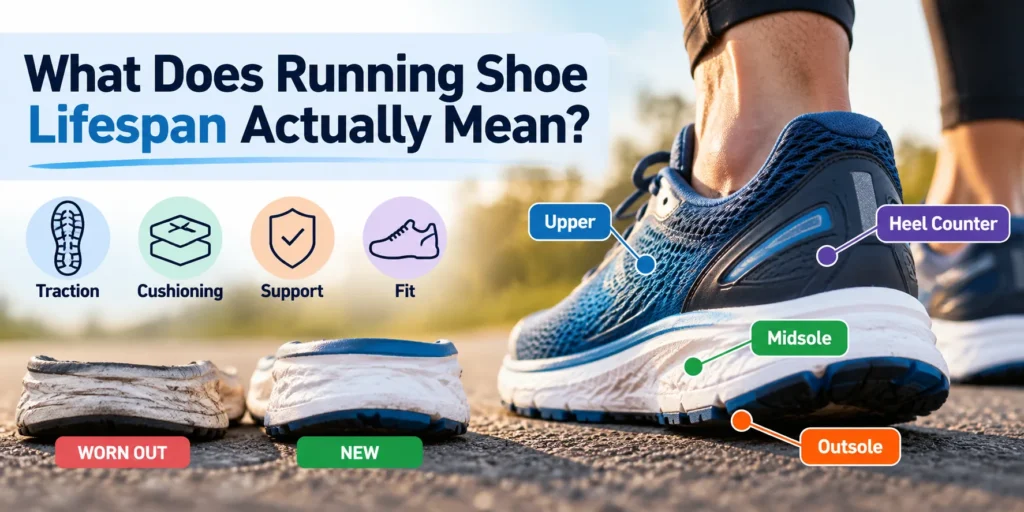
Running shoe lifespan is the period during which a shoe continues providing suitable cushioning, traction, structural support, and fit for running. It’s usually measured in miles rather than months.
A shoe can look clean while its cushioning has already changed substantially. Appearance alone doesn’t establish whether it’s ready for another run.
Which Parts of Running Shoes Wear Out?
Running shoes contain several components that experience different types of wear.
- Outsole: The bottom rubber layer provides traction and resists abrasion.
- Midsole: The cushioning layer compresses and recovers during running.
- Upper: Fabric, mesh, and overlays help secure your foot.
- Heel counter: The structured heel area helps maintain foot positioning.
- Interior lining: Padding around the heel and collar can deteriorate through friction.
These components rarely wear at identical rates. Your outsole might remain usable after the midsole loses its familiar feel.
The American Academy of Podiatric Sports Medicine identifies sole, cushioning, and structural wear as important replacement considerations.
How Many Miles Do Running Shoes Last?
Most everyday running shoes have an approximate replacement range of 300–500 miles. This represents a general inspection and planning guideline, not a guaranteed expiration point.
According to REI’s running shoe replacement guidance, cushioning deterioration and visible damage should influence your decision alongside mileage.
Running Shoe Lifespan by Weekly Mileage
The following calculations assume that all recorded running miles accumulate on one pair. Actual replacement dates depend on your shoes’ condition.
| Weekly Running | 300 Miles | 500 Miles |
|---|---|---|
| 10 miles | 30 weeks | 50 weeks |
| 15 miles | 20 weeks | 33 weeks |
| 20 miles | 15 weeks | 25 weeks |
| 30 miles | 10 weeks | 17 weeks |
Example: Running 20 miles every week produces approximately 400 miles in 20 weeks. That’s a sensible point for a thorough inspection.
These calculations don’t include walking, gym sessions, or daily errands. Count those activities when they contribute substantial additional wear.
Do Trail and Racing Shoes Last as Long?
Not always. Shoe construction and intended use influence how quickly components deteriorate.
- Everyday road trainers: Often fall within the general 300–500-mile range.
- Trail running shoes: Rough surfaces and abrasive terrain can accelerate upper and outsole damage.
- Lightweight racing shoes: Performance-focused construction may prioritize low weight over long-term durability.
- Minimalist shoes: With less cushioning, sole wear and changes in ground feel deserve attention.
No shoe category has a universal lifespan. Check the manufacturer’s guidance for your particular model.
What Factors Affect How Long Running Shoes Last?
Running frequency, shoe construction, terrain, and individual movement patterns influence durability. Two runners using identical models may reach different replacement points.
1. Running Surface
Rough pavement and abrasive trails can wear outsole rubber faster. Sharp rocks may also damage exposed foam or upper materials.
Running on a treadmill still compresses the midsole. Those miles count toward shoe usage, even when the outsole appears cleaner.
2. Runner Weight and Movement
Greater loading can increase mechanical stress on a shoe, although body weight alone cannot predict lifespan. Landing mechanics also influence wear distribution.
Some runners wear the outside heel first. Others create more wear near the forefoot or inner edge.
3. Cushioning Material
Modern running shoes use materials such as EVA, TPU, and PEBA foam. Each can be manufactured with different levels of softness, resilience, and durability.
More expensive foam doesn’t automatically last longer. ASICS’ explanation of running shoe wear emphasizes running style, terrain, and shoe construction.
4. Frequency and Other Activities
Daily running repeatedly loads the shoe’s cushioning. Wearing the same pair throughout the day adds further use.
I recommend reserving your main running pair for running whenever practical. It also makes total mileage easier to estimate.
5. Heat, Moisture, and Storage
Heat and environmental exposure can affect foam, adhesives, and upper materials. Storing damp shoes in an enclosed space also makes proper drying difficult.
- Keep shoes away from heaters and hot car interiors.
- Allow wet shoes to air-dry naturally.
- Store footwear in a cool, dry, ventilated area.
- Avoid leaving shoes exposed to strong sunlight for extended periods.
What Are the Warning Signs That Running Shoes Are Worn Out?
The strongest warning signs are meaningful changes in cushioning, tread, structure, or comfort. A shoe doesn’t need to develop a hole before it becomes unsuitable for running.
1. The Cushioning Feels Flat
Running shoes gradually experience repeated foam compression. Over time, the midsole may feel less lively or comfortable.
Compare your current shoes with a newer pair of the same model when possible. A noticeable difference deserves attention.
2. The Outsole Has Lost Traction
Inspect the rubber underneath both shoes. Smooth patches, exposed midsole foam, and excessive unevenness can signal significant wear.
Loss of traction becomes especially important on wet roads. Replace shoes if their grip is no longer appropriate for your running conditions.
3. The Heel Counter Is Damaged
The heel counter helps maintain the shape of the shoe’s rear section. Damage or unusual flexibility may reduce its ability to hold your heel securely.
Check whether either shoe tilts noticeably on a level surface. Uneven deformation is another reason to investigate.
4. Running Feels Unusually Uncomfortable
New discomfort during previously comfortable runs can suggest declining shoe performance. However, soreness can also result from training changes or other causes.
Persistent or significant pain deserves professional assessment. Don’t assume buying new shoes will resolve an injury.
5. The Upper No Longer Fits Securely
Repeated use can stretch or damage upper materials. Loose heel lining, tears, and distorted fabric may reduce foot security.
If your feet begin sliding inside the shoes, compare the symptoms with our guide to running shoes that are too big.
How Can You Check Running Shoes at Home?
You can evaluate shoe condition at home using a simple five-step inspection. No specialized equipment is required.
- Check the mileage: Estimate total running distance since purchase.
- Inspect the outsole: Look for exposed foam, excessive smoothing, or uneven tread wear.
- Examine the midsole: Check for persistent compression, cracking, or unusual deformation.
- Inspect the upper and heel: Look for damage, loose lining, and reduced structural integrity.
- Compare running comfort: Notice whether familiar runs feel substantially different.
I like this method because it combines measurable mileage with physical inspection. Neither method provides the complete picture independently.
Can You Test Cushioning by Pressing the Midsole?
Pressing the foam may reveal severe compression or obvious damage. However, it cannot reliably measure cushioning performance during running.
Running creates dynamic forces that differ from finger pressure. A newer comparison pair offers more useful context.
What If the Shoes Still Look New?
Clean uppers don’t guarantee healthy midsoles. Internal cushioning can change without visible cracks or torn fabric.
Pay attention to overall feel, especially after hundreds of miles. Appearance should be one part of your decision.
How Can You Make Running Shoes Last Longer?
Good shoe care can reduce avoidable damage, although it cannot stop normal material fatigue. The following habits help preserve footwear condition.
Rotate Between Two Running Shoe Pairs
Using two pairs spreads your weekly mileage across separate shoes. Each pair accumulates fewer miles over the same calendar period.
For example, alternating two pairs during a 20-mile training week gives each approximately 10 miles. That’s useful for managing replacement schedules.
Rotation doesn’t guarantee more total miles from either pair. Shoe construction and use still determine durability.
Clean Running Shoes Gently
Dirt and debris can collect around the outsole, upper, and laces. Routine cleaning helps you spot damage while maintaining their appearance.
- Remove loose dirt with a soft brush.
- Use mild soap and water when necessary.
- Clean the outsole grooves carefully.
- Remove excess moisture with a towel.
- Allow shoes to air-dry away from direct heat.
Follow your shoe manufacturer’s cleaning instructions. Machine washing and tumble drying can damage materials or adhesives.
Use Proper Fit and Lacing
Poor fit can create excessive internal movement and friction. Secure lacing helps hold your foot without uncomfortable pressure.
Our guide to how tight running shoes should be explains the balance between secure heel support and comfortable forefoot space.
Use Running Shoes for Their Intended Purpose
Running shoes are designed primarily for forward movement. Activities involving frequent sideways motion may place different demands on their structure.
Use activity-specific shoes when appropriate. Keeping running and everyday footwear separate also improves mileage tracking.
How Do You Track Running Shoe Mileage?
The simplest approach is to record the date, model, and distance for each run. Total the miles for every pair separately.
Many GPS watches and running apps support equipment tracking. A spreadsheet or notebook works just as well.
Example Running Shoe Mileage Log
| Week | Weekly Miles | Total Miles |
|---|---|---|
| 1 | 20 | 20 |
| 5 | 20 | 100 |
| 10 | 20 | 200 |
| 15 | 20 | 300 |
This example assumes consistent weekly mileage without missed training. Your actual record should reflect completed sessions.
Set a reminder to inspect your shoes near 300 miles. Continue checking them regularly rather than treating 500 miles as a mandatory target.
Should You Replace Running Shoes Based on Miles or Months?
Mileage is generally more informative for regularly used running shoes. Months become useful when you don’t know how much a pair has been worn.
- Frequent runners: Track distance and inspect footwear regularly.
- Occasional runners: Consider age, storage conditions, and visible wear.
- Daily walkers: Include walking usage when evaluating cushioning deterioration.
- Stored shoes: Inspect adhesives, materials, and comfort before returning to regular use.
Brooks Running’s replacement guidance also explains that performance shoes can deteriorate through regular walking, work use, and storage.
Do Unused Running Shoes Expire?
Unused shoes can deteriorate over time, especially in poor storage conditions. Adhesives may weaken, while some materials become less flexible.
There isn’t one reliable expiration date for every unworn pair. Inspect older shoes carefully before using them for demanding runs.
When Should You Buy Replacement Running Shoes?
Start considering replacements when mileage approaches the usual range or performance noticeably declines. Serious structural damage warrants earlier action.
Choose a model that matches your running habits and feels comfortable from the beginning. A higher price doesn’t guarantee greater durability.
Check the Fit Before Buying
Replacing worn shoes with a poorly fitting pair can introduce new problems. Measure both feet and confirm the correct size.
If you’re uncertain, follow our guide on how to find your running shoe size.
Leave adequate room for natural toe movement. Our running shoe toe-space guide explains what to check.
Should You Buy the Same Model Again?
Buying the same model can make sense when its fit and running feel have worked well. However, newer versions sometimes introduce meaningful changes.
Try the replacement before committing whenever possible. Compare comfort, heel hold, width, and underfoot feel.
What Mistakes Should You Avoid When Replacing Running Shoes?

The biggest mistake is relying on one signal while ignoring the overall condition of your footwear. Use mileage, visible wear, and running comfort together.
- Waiting for holes: Cushioning may deteriorate before significant external damage appears.
- Ignoring uneven wear: Excessive asymmetry can affect the shoe’s feel and stability.
- Assuming 500 miles is guaranteed: Some shoes require replacement considerably earlier.
- Ignoring additional usage: Walking and everyday activities also contribute wear.
- Buying only by appearance: Fit and intended running use matter more than color.
- Changing shoe types abruptly: Large differences in cushioning or heel drop may require gradual adaptation.
Remember that new discomfort isn’t always caused by worn shoes. Seek qualified medical advice for persistent or worsening pain.
Which Running Shoes Are Worth Considering as Replacements?
If your current shoes need replacing, these established models offer three different approaches to everyday running. The selections focus on intended use and manufacturer specifications, not guaranteed lifespan.
The editorial suitability scores below reflect design and use-case matching. They are not customer ratings, laboratory durability scores, or claims of personal product testing.
🏆 Balanced Daily Trainer
Brooks Ghost 18
★★★★½ 4.5/5 Editorial Suitability
The Ghost 18 features nitrogen-infused DNA LOFT v3 cushioning and a manufacturer-listed 10 mm heel drop. It is designed for everyday road running, walking, and balanced support.
I would shortlist it for runners who prefer a traditional daily trainer rather than an aggressive racing-shoe feel.
☁️ Maximum Cushioning
ASICS GEL-NIMBUS 28
★★★★☆ 4.0/5 Editorial Suitability
The GEL-NIMBUS 28 combines FF BLAST PLUS cushioning with PureGEL technology. Its maximum-cushion design emphasizes comfort during easy and longer runs.
I would consider it for runners seeking a plush, neutral road-running experience. Extra cushioning doesn’t guarantee a longer lifespan.
⚡ Versatile Everyday Running
Saucony Ride 19
★★★★☆ 4.0/5 Editorial Suitability
The Ride 19 uses reformulated PWRRUN+ cushioning and an engineered mesh upper. Its design aims to balance soft landings, smooth transitions, and everyday versatility.
I would shortlist it for runners wanting one shoe for easy runs and varied training. Confirm the fit before purchasing.
Affiliate disclosure: As an Amazon Associate, we may earn from qualifying purchases. Availability, product versions, and prices can change.
Frequently Asked Questions About Running Shoe Lifespan
Can Running Shoes Last 1,000 Miles?
Some runners may continue using shoes beyond the usual 300–500-mile range, but 1,000 miles is well beyond typical replacement guidance. Significant cushioning or outsole deterioration may occur before that point.
Don’t treat extreme mileage as a durability goal. Evaluate traction, structure, fit, and comfort regularly.
How Long Do Running Shoes Last If You Run Every Day?
Daily running shoes often reach 300–500 miles within a few months. For example, running five miles every day produces 35 miles weekly, reaching 300 miles in approximately nine weeks.
Your actual replacement point depends on shoe construction, surfaces, and physical wear.
Do Expensive Running Shoes Last Longer?
Not necessarily. Higher prices may reflect specialized materials, lightweight construction, or performance features rather than greater durability.
Compare manufacturer guidance and real-world wear reports for individual models. A comfortable daily trainer may offer better value than an expensive racing shoe.
Can You Still Walk in Worn-Out Running Shoes?
Some retired running shoes remain suitable for limited casual walking if they retain adequate grip, structure, and comfort. However, shoes with uneven soles, damaged uppers, or significant instability should be retired completely.
Walking still places repeated loads on footwear, so worn cushioning deserves attention.
How Do You Know When Running Shoes Are Completely Worn Out?
Running shoes may be worn out when cushioning feels substantially degraded, traction becomes inadequate, or structural damage affects fit and stability. New discomfort during familiar runs is another warning sign.
Inspect the entire shoe rather than relying solely on distance or appearance.
Final Takeaway: How Long Should You Keep Running Shoes?
Most running shoes last approximately 300–500 miles, but the exact lifespan depends on the shoe and how you use it. Regular inspection is more useful than a rigid replacement deadline.
Start checking closely around 300 miles. Replace your shoes when cushioning, traction, fit, or structure no longer meet your running needs.
My recommendation: Keep a mileage log, inspect your shoes monthly, and compare them with a newer pair when their performance becomes questionable. Choose your next shoes based on comfort and fit, not promises of unusually long durability.


Steven is a former sportsperson and now a full-time businessman and research writer. He is the mastermind of this site, and he created this site to help people who need specialized shoes for different activities. When he was a sportsperson, he was very passionate about different types of shoes for his sports purpose. The passion he had for shoes at that time now turned into his profession. Besides his shoe business, he loves sharing his knowledge and experience with people and helping them maintain healthy feet.
More Posts
