

Quick Answer
Choose the Brooks Hyperion 2 for fast, light, grounded running. Choose the Brooks Hyperion 3 for more comfort during daily miles. In independent testing, the Hyperion 2 weighed 200.4 grams versus 242.4 grams for the Hyperion 3. The newer shoe adds cushioning, but its extra weight changes the ride. Neither has a propulsion plate.
What changes most between these two Brooks speed trainers?
- The Hyperion 2 is 42 grams lighter in one independent comparison.
- The Hyperion 2 suits short, fast sessions and a direct ground feel.
- The Hyperion 3 has a higher, more forgiving platform for everyday mileage.
Quick Verdict: Brooks Hyperion 2 vs Hyperion 3
Hyperion 2
$140 launch MSRP (US; current price varies)
Best for
Tempo repeats, shorter races, and runners who dislike heavy shoes.
Hyperion 3
$140 launch MSRP (US; current price varies)
Best for
Runners who mix daily miles with some faster workouts.
| Category | Hyperion 2 | Hyperion 3 |
|---|---|---|
| Overall daily versatility | — | 🏆 |
| Best value at equal MSRP | ✅ | ✅ |
| Lower weight | ✅ | ❌ |
| Greater heel cushioning | ❌ | ✅ |
| Grounded, quick feel | ✅ | ❌ |
Bottom line: The Hyperion 3 wins for mixed daily training thanks to extra cushioning; the Hyperion 2 is the better buy for speed-focused runners who want less weight, especially when discounted.
- The Hyperion 3 is the more cushioned all-round daily option.
- Both shoes launched at $140, so their original price gap was $0.
- The Hyperion 2 is better suited to light, quick interval sessions.
- The Hyperion 3 is more forgiving for runners who mix workout speeds.
- Independent lab weights differ by 42 grams, with the Hyperion 2 lighter.
I’m Steven Tyler, and I write footwear buying guides for FootwearHiker. If you’re searching for a Brooks Hyperion 2 review, you face a practical choice. Buy the lighter older model, or move to the softer Hyperion 3?
The names look close, yet the riding styles have changed. I’ve based this guide on Brooks specifications, published independent tests, and clearly identified runner feedback. I haven’t claimed to complete a personal mileage test in either shoe.
A shoe that feels fast in a short workout won’t always feel best on a relaxed run. Start with your main training goal. The right answer follows from that choice.
What Is the Brooks Hyperion 2 Designed to Do?
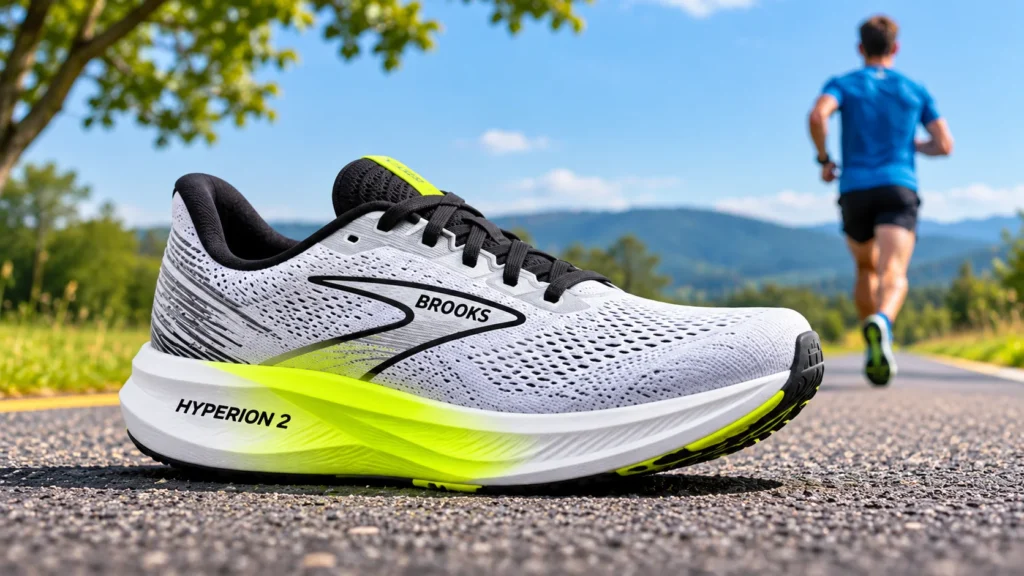
In short, the Brooks Hyperion 2 is a light, neutral road shoe for quick training. It feels lean and direct underfoot. Its best uses are tempo efforts, interval days, and shorter daily runs.
Quick verdict: Best for runners who value low weight and road feel more than deep cushioning.
Brooks uses DNA FLASH v2 foam in the midsole. Nitrogen infusion helps reduce weight while adding spring. The shoe also has a thin, breathable performance mesh upper and RoadTack rubber underfoot.
The listed heel-to-toe drop is 8 millimeters. That means the heel sits 8 millimeters higher than the forefoot under the brand’s measurement. The shoe has no carbon or nylon plate.
For a track session with 400-meter repeats, that simple design has clear appeal. You don’t carry extra cushioning you don’t want. At easier paces, the firmer feel becomes harder to ignore.
Independent testing reinforces the weight advantage. RTINGS measured a sample at 200.4 grams, or 7.07 ounces. The number varies with shoe size, but the difference remains notable when tested alongside the Hyperion 3.
Pros
- Low weight for fast workouts
- Direct, controlled road feel
- Breathable mesh upper
- No stiff plate to adapt to
Cons
- Less plush on long easy days
- Limited width choices
- Older sizes may be harder to find
- Not a high-rebound racing shoe
Brooks Men’s Hyperion 2 Neutral Running Shoe
Original US MSRP: $140. Current Amazon price, size, color, and seller require a live check.
What Is the Brooks Hyperion 3 Designed to Do?
The Brooks Hyperion 3 shifts toward softer, more versatile daily training. It keeps the responsive DNA FLASH v2 foam but adds cushioning and a more substantial upper. The result targets runners who use one pair for varied speeds.
Quick verdict: Best for runners who want brisk daily training without the firmer, stripped-back feel of the Hyperion 2.
Brooks reports another 2 millimeters of underfoot foam and adds comfort features. These include a double-jacquard upper, a knit collar, and updated tongue construction. RoadTack rubber remains part of the outsole.
Independent tests show a meaningful weight increase. RTINGS measured the Hyperion 3 at 242.4 grams, or 8.55 ounces. Its measured heel stack was 36.8 millimeters compared with 33.5 millimeters for the earlier shoe.
The main benefit isn’t simply having more foam. It is the less harsh feel when the pace drops. That matters during recovery miles or steady outings after a hard session.
However, the higher platform changes how the shoe moves. Runners who love the quick turnover of the Hyperion 2 shouldn’t assume the newer version feels the same. The Hyperion 3 has no plate and remains a neutral road trainer.
Pros
- More cushioning for daily miles
- Updated collar and tongue comfort
- Useful across several training paces
- Still lighter than many plush trainers
Cons
- Noticeably heavier than Hyperion 2
- Lower toe-box volume in some tests
- Less of a minimal speed-shoe feel
- Not a substitute for a plated racer
Brooks Men’s Hyperion 3 Neutral Running Shoe
Original US MSRP: $140. Current Amazon price, size, color, and seller require a live check.
How Do the Brooks Hyperion 2 and 3 Specifications Compare?
The main differences are weight, stack height, upper design, and ride comfort. Both shoes have an 8-millimeter listed drop, nitrogen-infused DNA FLASH v2 foam, and no propulsion plate.
These figures combine Brooks design information with matched RTINGS lab readings. Independent measurements can differ from brand listings. That is why comparing measurements from one test source matters.
| Specification | Hyperion 2 | Hyperion 3 | Advantage |
|---|---|---|---|
| Original US MSRP | $140 | $140 | Tie |
| Lab weight | 200.4 g / 7.07 oz | 242.4 g / 8.55 oz | Hyperion 2 |
| Lab heel stack | 33.5 mm | 36.8 mm | 3 for cushioning |
| Listed drop | 8 mm | 8 mm | Tie |
| Midsole | DNA FLASH v2 | DNA FLASH v2 | Different tuning |
| Upper | Light performance mesh | Double-jacquard mesh | Fit preference |
| Knit collar update | No comparable update | Yes | Hyperion 3 |
| Outsole | RoadTack rubber | RoadTack rubber | Tie on material |
| Plate | None | None | Tie |
| Support | Neutral | Neutral | Tie |
| Primary use | Fast, light workouts | Mixed daily training | Depends on runner |
For more context on stack, drop, and weight, see my running shoe specifications guide. A larger number isn’t always better. Cushion depth affects comfort, while mass affects how nimble a shoe feels.
Source checks: RTINGS matched laboratory comparison and Brooks Hyperion 3 product details.
Which Shoe Is Better for Speed Work and Tempo Runs?
The Hyperion 2 wins for runners who put low weight first. Its simpler upper and thinner platform help create a lean feeling during fast efforts. The Hyperion 3 still handles workouts, but carries more material.
At the same test source, the weight gap reaches 42 grams per shoe. That doesn’t guarantee faster race times. It does explain why the models can feel different during rapid steps and repeated pace changes.
For a runner doing ten short intervals, the Hyperion 2’s stripped-back design makes sense. The lighter shoe asks less of the runner when changing speed. Its firmer foam also gives a clearer sense of the road.
There is one useful counterpoint. More stack does not always mean less speed. Runners who run faster when their legs feel protected can prefer the Hyperion 3. Comfort and stride mechanics still matter more than a weight figure alone.
Neither shoe has a carbon plate, so don’t expect plated racing-shoe propulsion. For more structured speed support, a model such as the Brooks Hyperion Max 2 brings a different geometry and a nylon plate.
Which Hyperion Has Better Cushioning for Everyday Runs?
The Hyperion 3 wins for runners who want more impact protection. Its taller platform makes daily miles feel more forgiving. The difference is most useful when a fast shoe also serves as an easy-day trainer.
RTINGS measured 36.8 millimeters at the Hyperion 3 heel. The Hyperion 2 measured 33.5 millimeters in the same comparison. The newer shoe also showed higher heel cushioning in its controlled testing.
Think about a 45-minute easy run the morning after a workout. A deeper platform can feel more pleasant when your legs are tired. That doesn’t make the Hyperion 3 a plush recovery shoe, though.
Both remain relatively performance-focused. Someone who needs thick, soft cushioning for long runs should also consider a dedicated comfort trainer. The Hyperion family is built around responsive road running, not maximum softness.
The less obvious detail is pace. The Hyperion 2 can feel more natural when you’re moving fast. Yet that same direct character can feel unforgiving when you slow down. Choose based on the pace you run most often.
Which Brooks Hyperion Offers Better Price and Value?
At equal pricing, the Hyperion 3 offers more everyday comfort; the Hyperion 2 offers more speed-focused value. Both models launched with a $140 US MSRP. Their original price difference was $0.
Current prices are different from launch prices. Older colors and sizes can sell at a discount, and retailer stock changes. Amazon’s current live price could not be verified during this review, so no live discount is claimed here.
A simple buying rule helps. Compare the exact size and color you intend to buy. Do not compare a discounted Hyperion 2 in an unwanted size with a full-price Hyperion 3 in your correct size.
Suppose the older model costs $85 and the newer model costs $140. That’s a $55 hypothetical saving, not a verified offer. For speed sessions, the saving could justify choosing the older shoe. For everyday comfort, the newer platform may justify paying more.
A fair deal also depends on return terms. Check who sells the pair, whether returns are free, and whether your size is available. The lowest price loses value if the fit isn’t right.
Which Shoe Has the Better Fit, Grip, and Durability?
Neither model wins for every foot; the Hyperion 2 offers a roomier toe-box height in one lab comparison. The Hyperion 3 adds a more comfort-focused collar, but its forefoot can feel lower.
RunRepeat measured the Hyperion 2 toe-box height at 27.7 millimeters. Its Hyperion 3 test measured 24.7 millimeters. That difference can matter if your toes need vertical space.
The Hyperion 3’s newer upper may hold some feet more securely. Yet a snug performance fit isn’t helpful if it presses on your toes. Try your usual running size first and assess the full shape.
Both use RoadTack outsole rubber. They are made for paved roads and similar firm surfaces, not loose technical trails. Be careful on wet paint, smooth tile, ice, and leaves regardless of tread design.
Durability depends on your stride, surface, and care routine. A light trainer can last well without lasting as long as a heavy daily shoe. Watch the outsole, midsole feel, heel lining, and upper seams.
Fit warning: Don’t size up just to solve a narrow toe box. Extra length can cause heel slip while leaving the shape problem unsolved.
Before ordering, use my running shoe fit test to check toe clearance, midfoot comfort, and heel security.
Which Hyperion Wins in Real-World Running Situations?
The best choice changes with your training plan. The Hyperion 2 favors short, quick work. The Hyperion 3 suits mixed weeks that include more steady running.
Which Is Better for Short Intervals?
The Hyperion 2 wins for short intervals. Its lower weight and firmer ground feel fit quick repetitions. It is a sensible choice for runners who already have a separate easy-day shoe.
Which Is Better for a Daily Three-to-Five-Mile Run?
The Hyperion 3 wins for mixed daily mileage. Its added foam can make routine sessions more comfortable. It also remains responsive enough for a brisk finish.
Which Is Better for a Cool-Weather Morning Workout?
The Hyperion 2 wins when low weight and brisk pace are the goals. However, both use foam that can feel firmer in cold conditions. Wear suitable socks and use a warm-up before hard running.
Which Is Better for Coaches, Teams, or Fleet Purchases?
Neither shoe is a universal team-wide winner. For a running club buying several pairs, sizing and return policies matter first. The Hyperion 3 is the safer default for mixed daily use, while the 2 suits dedicated speed sessions.
Which Is Better for Short Road Races?
The Hyperion 2 wins for runners who prefer an agile, unplated racer. Its weight favors fast turnover. Still, someone seeking maximum race-day rebound should compare dedicated racing shoes.
Which Is Better for a One-Shoe Training Rotation?
The Hyperion 3 wins if one pair must handle several paces. It offers more daily cushioning without becoming a heavy stability model. A runner doing mainly easy miles should still compare traditional daily trainers.
Is the Hyperion 2 Still Worth Buying at a Discount?
Yes, the Hyperion 2 remains worth buying when its fit and purpose match your training. It didn’t lose its key advantage when the Hyperion 3 arrived. The older model remains the lighter, more direct shoe.
Don’t pay extra merely because a model is newer. You should get a real benefit for the difference in price. The Hyperion 3 provides that benefit through comfort and an updated upper, not a dramatic jump in racing speed.
Before checkout, confirm the product is new, the seller is dependable, and your size is correct. Different color options can have different prices and stock levels. Look beyond the discount percentage.
For runners who prefer a firmer daily shoe, another comparison is useful. My Brooks Launch 11 review covers a more everyday-oriented option. That helps separate true speed needs from general lightweight training.
Who Should Buy the Hyperion 2 or Hyperion 3?
Buy the Hyperion 2 for lightweight speed work and the Hyperion 3 for more comfortable daily training. If neither role matches your needs, don’t force the purchase.
Buy the Hyperion 2 if:
- You run short tempo or interval sessions.
- You favor light shoes with a direct feel.
- You already own a softer long-run trainer.
- You find a genuine discount in your size.
Buy the Hyperion 3 if:
- You use one shoe for varied road sessions.
- You want more cushioning for daily miles.
- You value an updated collar and tongue.
- The forefoot fits without pressure.
Don’t buy either if you need wide-width support, substantial stability guidance, deep recovery cushioning, or a plated race-day shoe. Look for a model designed around that need instead.
Some runners need a true easy-day trainer more than another speed model. Others need a roomier upper. Your main foot and training needs should guide the choice before brand loyalty does.
What Are Runners and Independent Reviewers Saying?
Published feedback splits along one main line: the Hyperion 2 feels faster, while the Hyperion 3 feels more cushioned. This is a review synthesis, not a verified Amazon customer-rating average.
RTINGS describes the Hyperion 2 as lean and firm. Its Hyperion 3 assessment highlights the softer platform and broader daily use. RunRepeat independently found the weight jump noticeable, while also documenting the extra cushioning.
That contrast also appears in individual runner discussions. Some owners favor the Hyperion 2’s light feel and dislike the direction of the newer model. Those are personal accounts, not proof that most owners agree.
Review sentiment at a glance
- Hyperion 2 positives: light weight, quick turnover, breathable upper.
- Hyperion 2 concerns: firmer ride and less long-run protection.
- Hyperion 3 positives: more cushioning, updated upper comfort.
- Hyperion 3 concerns: extra weight and lower-volume toe box.
For published measurements, see RunRepeat’s Hyperion 2 test and RunRepeat’s Hyperion 3 test. Amazon review totals and averages can change, so check the current listing directly before buying.
How Should You Maintain Brooks Hyperion Running Shoes?
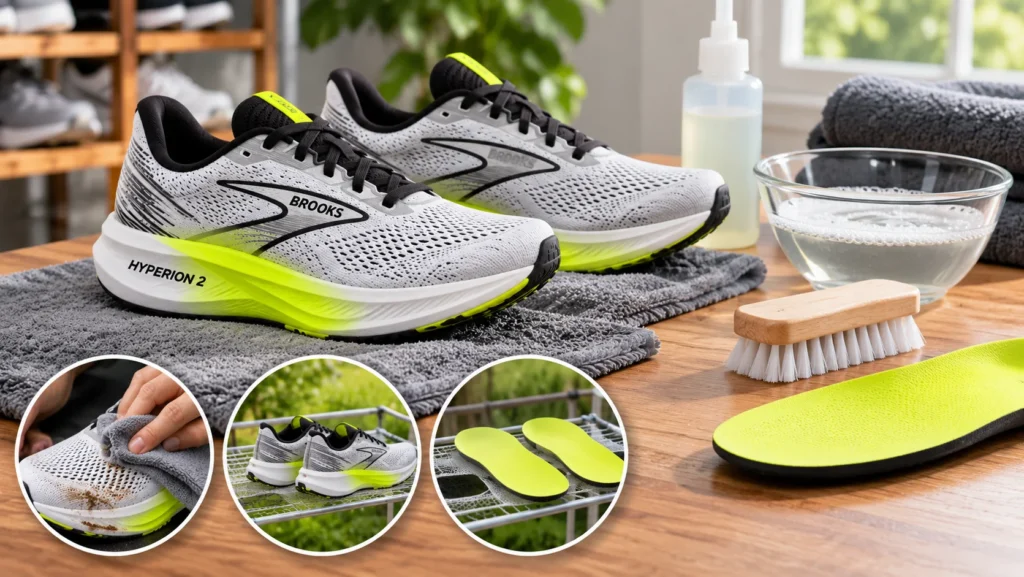
Hand-clean both shoes gently, dry them at room temperature, and inspect wear often. These steps protect the mesh, foam, and rubber. Harsh cleaning rarely improves performance.
After each muddy or wet run, remove loose dirt with a soft brush. Wipe the upper with mild soap and a damp cloth. Pull the insoles out if they are removable, and let everything dry fully.
Avoid direct heaters, tumble dryers, and long hot-car storage. Heat can damage glues and alter foam feel. Machine washing can also put stress on the shoe’s upper and construction.
Rotate pairs when you run on back-to-back days. Inspect the heel, forefoot rubber, midsole creases, and inner lining. Replace the shoe when grip, support, or comfort has clearly worsened.
For a step-by-step routine, see how to clean running shoes safely. The goal isn’t to keep the shoe looking new. It is to keep its fit and traction working as intended.
Final Verdict: Is the Hyperion 2 or Hyperion 3 Better?
The Hyperion 3 is the better all-round daily trainer, but the Hyperion 2 remains my speed-focused pick. The choice turns on one trade-off: less weight versus more cushioning.
The older Hyperion 2 makes sense for intervals, short races, and runners who already own a softer shoe. Its lighter design is not outdated merely because a new model exists.
The Hyperion 3 offers more comfort across mixed paces. Yet its added foam and upper material make it feel less stripped down. If you loved the original direct ride, an automatic upgrade can disappoint.
Neither shoe is the best answer for every runner. Choose the model that fits your foot and your most common workouts. Then compare the actual checkout price, size, and return terms.
Frequently Asked Questions
Is the Brooks Hyperion 2 better than the Hyperion 3?
The Brooks Hyperion 2 is better for runners who value low weight and a grounded ride. Independent testing found it lighter than the Hyperion 3. The newer model is better for mixed daily running because it adds cushioning. Your usual pace, comfort needs, and shoe rotation decide which one wins for you.
What is the main difference between Hyperion 2 and 3?
The biggest difference is the shift from a lean speed trainer to a softer daily trainer. The Hyperion 3 has a taller platform and a more comfort-focused upper. It also weighs more. Both still use DNA FLASH v2 foam, carry an 8-millimeter listed drop, and have no propulsion plate.
Can you run a half marathon in the Brooks Hyperion 2?
Yes, you can run a half marathon in the Brooks Hyperion 2 if its cushioning suits you. It is light and made for faster road running. However, its firmer ride can feel demanding over long distances. Try it during longer training runs before choosing it for an important race.
Does the Brooks Hyperion 3 fit the same as Hyperion 2?
Not exactly. Both have performance-oriented shapes, but independent tests show differences in toe-box volume. The Hyperion 3 can feel lower over the toes. Start with your usual running size, then check length, width, and height around the forefoot. Don’t assume the same size gives the same fit.
Should I buy the Hyperion 2 if it is on sale?
Yes, consider the Hyperion 2 on sale if you want a light shoe for fast sessions. A discount doesn’t fix poor fit or insufficient cushioning, though. Check the exact size, color, seller, and return terms. Compare the final price with the Hyperion 3 before deciding whether the older model offers better value.
Affiliate Disclosure: As an Amazon Associate, I earn from qualifying purchases. If you click a link on this page and make a purchase, I may receive a small commission — at no extra cost to you. I only recommend products I genuinely believe will help you. This helps keep the site free and running. Thank you for your support.