

Quick Answer
The ASICS Gel Nimbus 28 is the better all-around cushioned trainer for most new buyers. Its official men’s weight is 281 g, versus 305 g for the Gel Nimbus 27. Pick the 28 for a lighter, smoother easy-run shoe. Pick the 27 if its lower sale price matters more than the upgrades.
What changes most between the Gel Nimbus 28 and 27?
- The 28 weighs about 24 g less using ASICS men’s published figures.
- The 28 adds a redesigned knit upper, tongue loop, and lighter outsole.
- The 27 keeps much of the same cushioning concept at a lower sale price.
Quick Verdict: Gel Nimbus 28 vs Gel Nimbus 27
GEL NIMBUS 28
ASICS NZ customer-rating snapshot; not an editorial test score.
$119.95 (Amazon-tracked, men’s 10.5, Black/Graphite Grey)
Best for:
Runners who want maximum impact protection in a less heavy daily trainer.
GEL NIMBUS 27
ASICS NZ customer-rating snapshot; not an editorial test score.
$99.95 (Amazon-tracked, men’s 12, Black/Lake Grey)
Best for:
Value-minded runners happy with a heavier, plush neutral shoe.
| Category | Nimbus 28 | Nimbus 27 |
|---|---|---|
| Overall winner | 🏆 | — |
| Best value at sampled sale prices | ❌ | ✅ |
| Lower published weight | ✅ | ❌ |
| Updated upper and tongue loop | ✅ | ❌ |
| Cheaper sampled listing | ❌ | ✅ |
Bottom line: The Nimbus 28 wins for comfort-focused runners who want less weight; the Nimbus 27 makes more sense when a meaningful discount matters most.
Prices were reported by an Amazon price tracker for different men’s size/color listings. They are examples, not a matched-size price test. Check the price for your own size.
- Choose the Nimbus 28 for its lighter upper, revised outsole, and easy-run comfort.
- The tracked examples are $119.95 for the 28 and $99.95 for the 27.
- Neither model is a fast, springy racing shoe; both favor relaxed miles.
- The Nimbus 27 remains a good budget choice if its fit works for you.
- The biggest upgrade is reduced weight, not a new high-bounce foam.
I’m Steven Tyler. This comparison uses ASICS product details, published lab tests, and buyer reviews. It is a research-based review, not a claim that I ran miles in these two pairs. If you’re choosing your next running shoes, focus first on fit, comfort, and pace. Those factors matter more than a new model number.
Both Nimbus models aim to make easy miles feel less harsh. Still, the shoes differ in weight, upper design, and current sale pricing. Use this comparison alongside a solid running shoe review checklist before deciding.
What Is the ASICS Gel Nimbus 28 Best For?
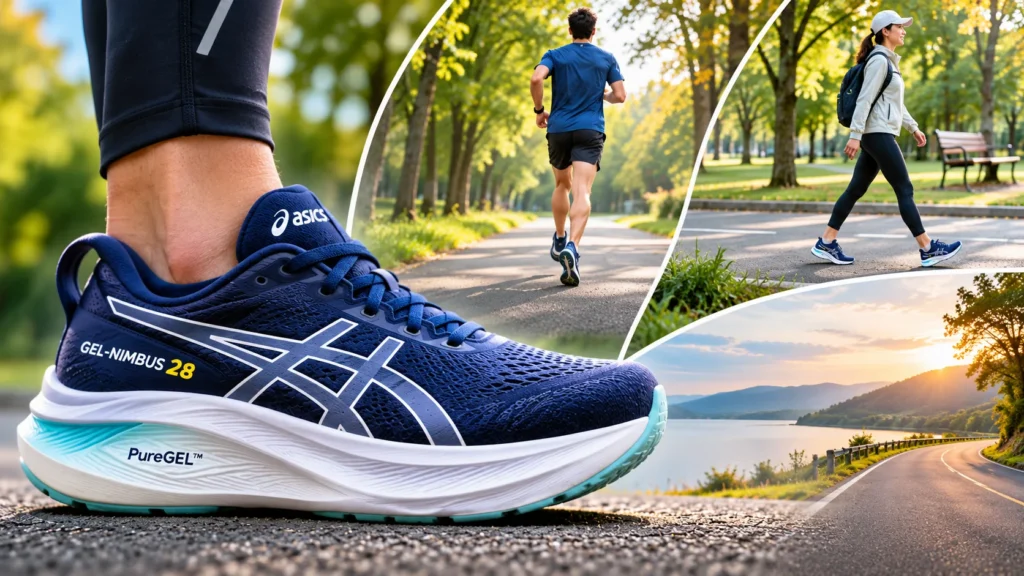
The ASICS Gel Nimbus 28 is best for easy road runs, recovery days, and long walks. It pairs a tall foam midsole with a stable-feeling base. The shoe is built for neutral runners who want plenty of material underfoot. That does not mean it feels soft like a pillow on every landing.
The ASICS product specification confirms FF BLAST PLUS cushioning with PureGEL in the heel. An engineered knit upper wraps the foot. The new tongue loop helps with putting the shoe on. Its official men’s weight is 281 g, with an 8 mm stated drop.
RunRepeat measured 137 SA of heel shock absorption and 133 SA at the forefoot. That supports its use on longer easy miles. However, the same lab recorded only 45.9% forefoot energy return. Buy this model for protection rather than a lively push-off.
Quick verdict: Nimbus 28. Best for runners who want premium comfort, strong wet-road grip, and less weight than the 27.
- Lower stated weight than the 27.
- Strong independently measured wet traction.
- Plush, secure knit upper.
- Broad base feels steady for a neutral shoe.
- Removable insole for fit changes.
- Limited bounce at faster paces.
- Low vertical room over the toes.
- Upper can run warm.
- Not designed for muddy trails.
- Premium price without a new midsole foam.
ASICS Men’s Gel-Nimbus 28 Running Shoes
Amazon-tracked example: $119.95 for men’s 10.5, Black/Graphite Grey. Price changes with size.
What Is the ASICS Gel Nimbus 27 Best For?
The ASICS Gel Nimbus 27 is best for buyers who want ample cushioning for less money. It has FF BLAST PLUS ECO foam and rearfoot PureGEL cushioning. The ASICS launch details list the men’s weight at 305 g in a US size 9. That makes it a heavier shoe, although its thick platform still suits steady training.
The upper uses jacquard mesh rather than the 28’s revised knit construction. Both shoes use a hybrid grip outsole with ASICSGRIP and durable AHARPLUS rubber. They also keep the familiar 8 mm stated heel drop, so the basic running purpose remains the same.
Independent testers disagree on which upper feels cooler. Running Shoes Guru reports that the 27’s upper breathes better than the 28’s. ASICS says the new 28 upper improves ventilation. That conflict makes fit testing more useful than trusting a single claim. For an older option, our ASICS Gel Nimbus 26 review offers more context.
Quick verdict: Nimbus 27. Best for shoppers who value familiar cushioning and can find their size at a sharp discount.
- Strong cushioning for everyday use.
- Same stated 8 mm drop as the 28.
- Good grip-focused outsole design.
- Discounts can improve value.
- Known, stable neutral ride.
- Heavier than the newer model.
- Less refined heel and upper design.
- Limited speed-focused energy return.
- Stock and sizes can shrink over time.
- Bulky feel for some faster sessions.
ASICS Men’s Gel-Nimbus 27 Running Shoe
Amazon-tracked example: $99.95 for men’s 12, Black/Lake Grey. Price changes with size.
How Do the Gel Nimbus 28 and 27 Specs Compare?
The Nimbus 28 mainly wins on weight and updated construction. Both are maximum-cushion neutral road shoes, rather than racing or stability models. The 28 keeps the core FF BLAST PLUS and PureGEL approach while changing the upper, outsole layout, and small fit details. Specifications only help when you know what each one changes during a run.
The weights below use ASICS published men’s figures. Labs may measure other values due to sample size, shoe size, and test method. The $119.95 and $99.95 prices reflect specific tracked Amazon listings, not universal sale prices. That matters because a size 12 shoe may cost far more than a size 10.5 shoe on the same day.
| Feature | GEL-NIMBUS 28 | GEL-NIMBUS 27 | Edge |
|---|---|---|---|
| Shoe category | Neutral road trainer | Neutral road trainer | Tie |
| Cushioning | Maximum | Maximum | Tie |
| Main foam | FF BLAST PLUS | FF BLAST PLUS ECO | Preference |
| Rearfoot technology | PureGEL | PureGEL | Tie |
| Heel drop, claimed | 8 mm | 8 mm | Tie |
| Men’s published weight | 281 g / 9.9 oz | 305 g / 10.8 oz | 28 |
| Upper | Updated engineered knit | Jacquard mesh | Fit-dependent |
| Outsole | Redesigned HYBRID ASICSGRIP | HYBRID ASICSGRIP | 28 for lower weight |
| Tongue finger loop | New feature | Not advertised | 28 |
| Heel structure | More streamlined | Earlier design | 28 |
| Published US list price for tracked listing | $170 | $165 | 27 |
| Tracked Amazon example | $119.95 (men’s 10.5) | $99.95 (men’s 12) | 27 on these samples |
Which Shoe Feels Better on Easy Runs and Long Runs?
The Nimbus 28 wins for most easy-run buyers who want less bulk. It still protects the foot with a deep midsole, but its trimmed weight changes the feel of each step. RTINGS reports that the 28 feels less bottom-heavy and better balanced than older Nimbus models. That matters as miles add up.
RunRepeat’s lab measured 137 SA of heel shock absorption in the 28. Its forefoot result was 133 SA. These numbers show the shoe can soften repeated impact. Yet the same review found that the midsole does not return much energy when you push off. Deep foam is not always lively foam.
The 27 remains a capable comfort shoe. It can feel planted and familiar at steady pace. If your runs are short and relaxed, the lower price can be more valuable than losing a little weight. Try both while jogging, not just standing in a store.
Does the Gel Nimbus 28 Have Better Bounce and Speed?
Neither Nimbus model is ideal for fast workouts, even though the 28 feels lighter. The 28 uses FF BLAST PLUS, a comfort-first foam rather than a high-rebound racing setup. RunRepeat measured 45.9% forefoot energy return, against a 61.5% comparison average in its test set. That gap explains the limited bounce.
Some testers find the 28 a little firmer or snappier than expected. Others call it dull when the pace climbs. Both views can be true because foot strike, weight, and pace change how foam feels. The important point is that a speed workout asks more from the midsole than an easy jog.
For intervals and fast finishes, consider a more lively trainer such as the ASICS Novablast line. For slow recovery miles, the Nimbus 28 remains the better pick in this two-shoe matchup. Don’t assume a lighter model is automatically a faster model.
Which Nimbus Has Better Fit, Toe Room, and Breathability?
The Nimbus 28 has a more refined upper, but neither model wins every fit test. Its engineered knit feels soft and secure. RunRepeat measured 97.6 mm across the widest interior area but only 22.7 mm in vertical toe-box height. That low roof can bother runners whose toes need extra room.
Runner feedback supports that warning. Some owners praise the secure heel and easy pull tabs. Others report pressure around the toes, especially in standard width. Running Warehouse also found that the 28 ran slightly short in length for its testers. Do not order a larger size blindly; compare the fit in your usual size first.
ASICS says the updated upper brings better breathability. RunRepeat still measured below-average ventilation at 64 BR versus 75 BR for its tested sample. On a hot, humid run, that matters. The 27’s mesh can appeal to buyers who prefer a different feel, but comfort still depends on your foot.
Fit warning: Allow space in front of your longest toe. Check heel grip and toe pressure while moving. Choose a wide model when the standard width pinches.
Which Shoe Has Better Grip and Long-Term Durability?
The Nimbus 28 has strong verified wet grip, while both shoes use reliable rubber blends. ASICS redesigned the HYBRID ASICSGRIP layout to reduce weight. It combines grip-focused rubber with tougher material in wear areas. The 27 uses the same broad outsole concept, though the layout differs.
RunRepeat measured a wet-concrete traction result of 0.99 for the Nimbus 28. Its tested running-shoe average was 0.53. The lab also recorded 1.0 mm of rubber wear in an abrasion test, near its average. These results support wet-road confidence, not guaranteed safety on ice or loose mud.
Longevity still depends on pace, body weight, and surface. Some reviewers have raised concerns about exposed foam and outsole coverage. Monitor the heel and forefoot for uneven wear. Replace worn shoes when traction, comfort, or fit declines. A clean shoe can look new while its cushioning no longer feels right.
Is the Nimbus 28 More Stable Than the Nimbus 27?
Both shoes feel stable for neutral trainers, but neither replaces a true stability shoe. The Nimbus 28 has wide ground contact and raised foam sidewalls. RunRepeat measured its forefoot platform at 119.0 mm and its heel at 99.1 mm. Those broad measurements help explain why the tall shoe can feel steady.
The 27 also offers a substantial platform, and some testers prefer its more planted feel. No neutral running shoe can guarantee control for every stride. A high stack can feel awkward to someone who wants close ground contact. That is especially true on uneven pavement and sharp turns.
Runners who need more guidance should compare dedicated support shoes. Our neutral versus stability shoes guide explains that difference. Choose the Nimbus for comfort first, not because a thick midsole looks supportive.
Which Nimbus Is Better for Walking and Standing?
The Nimbus 28 gets a small edge for long walks because it sheds weight. Its soft collar, tall cushioning, and smooth heel design can feel comfortable over hours. Buyer reviews on ASICS also include praise from people who wear the shoe during work shifts and daily walks. These accounts are useful, but they do not prove every walker will like it.
The Nimbus 27 can still offer strong value for walking. Its thicker-feeling build may be less noticeable at slow speed. The choice depends on heel fit, toe space, and whether the rocker shape feels natural. Walk on a level floor before deciding, then try a few stairs if the store allows it.
Some owners dislike how high-cushion shoes feel during balance changes. If you need a firm, low platform for work, neither Nimbus is the obvious winner. A lighter, lower shoe can be easier to manage.
Which One Works Better in Cold Weather or for Work Fleets?
Neither shoe is designed for icy winter paths or industrial fleet use. The Nimbus 28 has excellent wet-concrete grip in one lab test. That does not mean it has ice traction or a safety-rated outsole. Cold temperatures can also change how foam feels underfoot, so don’t treat summer comfort as a winter guarantee.
For ordinary cool-weather road walks, either model can work with suitable socks. Check that the upper leaves enough toe room once your socks are on. Avoid deep snow, black ice, or slippery work areas where special footwear is required.
For delivery teams and workers who stand all day, the 27 may win on acquisition cost. The 28 wins when lower shoe weight matters. Neither offers an industrial protective toe, puncture-resistant sole, or certified slip-resistance rating. Match job requirements before making a bulk purchase.
When Should You Choose Each Shoe for Real Runs?
The Nimbus 28 fits most recovery and long-run scenarios, but the 27 can win on cost. A runner doing three easy road outings each week will notice comfort and fit more than any speed difference. A runner buying a second pair only for walking can also save money if the 27 is discounted.
For long runs, the 28’s reduced weight is useful as time on your feet rises. For hot afternoons, ventilation and toe room matter more than a manufacturer’s comfort claim. For wet pavement, the 28 has unusually strong independent traction data. For interval days, look outside this pair rather than forcing either shoe into a speed role.
- Easy 5 km road jog: Nimbus 28 for a lighter feel.
- Long recovery outing: Nimbus 28 for less weight and deep cushioning.
- Budget walking shoe: Nimbus 27 if the sale price is meaningfully lower.
- Warm, humid training: try both; ventilation remains a concern.
- Winter ice: neither; seek appropriate winter traction.
- Workplace group purchase: Nimbus 27 for cost, if ordinary footwear is permitted.
Our daily training shoe guide can help match these goals to your weekly routine.
Is the Gel Nimbus 28 Worth More Than the 27?
The Nimbus 28 is worth a small premium for a fresh purchase, but not any price gap. ASICS lists the 28 at $170 before its advertised discounts. An Amazon price tracker recently showed $119.95 for a men’s size 10.5 in Black/Graphite Grey. A separate tracked Nimbus 27 listing showed $99.95 for men’s size 12 in Black/Lake Grey.
That sample gap is $20, but the two prices are not for the same size or color. Do not treat it as a controlled shopping comparison. A better check is to open both links, select your exact size, and compare the final totals. The cheapest option can change across colorways.
If you already own a comfortable 27, the 28 does not bring a radical new foam feel. Keep the older pair until it wears out. If you’re buying from scratch and prices are close, the lighter 28 is the more appealing option.
Who Should Buy the Nimbus 28 or 27, and Who Should Skip Both?
Buy the Nimbus 28 for comfort-led training; buy the 27 for discounted cushioning. The newer model suits people who jog easy, walk far, or want a less heavy maximum-cushion shoe. The older model suits buyers who already like the fit and find the right size at a strong sale price.
Do not buy either because it promises to prevent injury. No shoe guarantees that. Runners who need a faster daily trainer or a true stability model have stronger choices elsewhere. Use our running shoes buying guide to match shoe type with your own needs.
- You run mainly at relaxed pace.
- You want less weight than the 27.
- Wet-road grip matters to you.
- Your foot fits the knit upper.
- Your size is significantly cheaper.
- You like a familiar, sturdy-feeling ride.
- You don’t need the updated tongue loop.
- You prefer its upper fit.
Skip both if you mainly run fast intervals, need a low ground-feel shoe, want aggressive trail grip, or require a dedicated stability system. The ASICS Novablast line offers more energy-focused running options. The GEL-KAYANO line is a better place to start when stability features are the main goal.
What Are Real Buyers Saying About the Gel Nimbus 28 and 27?
Buyer feedback favors comfort in both models, with fit and heat as recurring concerns. ASICS New Zealand product pages have shown customer scores around 4.3 out of 5 for both models. Those figures are store snapshots, not matched Amazon ratings. The reviews are valuable because buyers describe daily use beyond a short test run.
Among Nimbus 28 comments, runners praise comfort for easy miles, walking, and work. Some describe firmer cushioning than expected. Others dislike a tighter toe box or the warm upper. One buyer mentions needing a larger size. Another reports that the shoe suits a steady pace but not every foot.
These comments do not show how common a complaint is across all buyers. We could verify an Amazon rating for a tracked Nimbus 27 listing, but not a comparable current rating for the exact tracked 28 listing. Avoid presenting unverified Amazon review counts as fact.
- Nimbus 28 positives: comfortable heel, easier step-in, lighter feel.
- Nimbus 28 complaints: toe pressure, warm fit, modest bounce.
- Nimbus 27 positives: consistent comfort, planted feel, better deals.
- Nimbus 27 complaints: more weight and a bulky ride.
Sources: ASICS customer reviews and independent running-shoe reviewers; comments vary by individual foot shape.
How Do You Care for Either Nimbus Model?
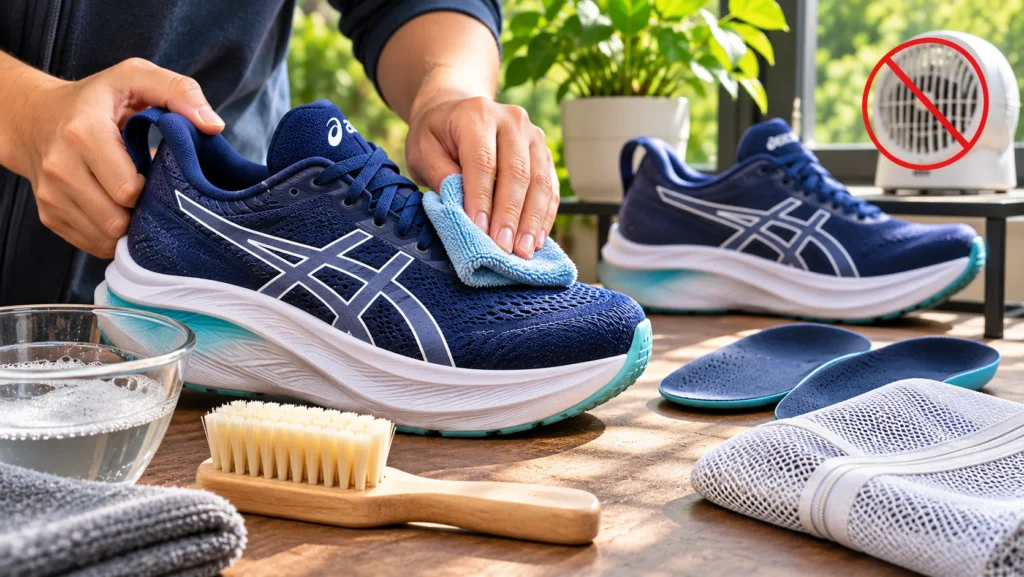
Keep both Nimbus models clean, dry, and away from direct heat to protect the upper and foam. After muddy or rainy outings, brush off grit and wipe the shoes with a damp cloth. Remove the insoles when they are wet. Let the shoes air-dry in a shaded, well-ventilated room.
Do not put the shoes beside a heater or run them through a hot dryer. Strong heat can affect adhesives, fabric, and foam. Check for stuck stones in the outsole grooves. Inspect the knit around the toes and heel collar for early wear, since friction can damage soft fabric.
There is no battery, electronic diagnostic tool, or charging schedule in either running shoe. More useful maintenance means rotating pairs when practical, wearing socks that fit, and checking cushioning as the miles rise. Replace shoes based on performance and wear, not a fixed date alone.
Final Verdict: Should You Upgrade to the Gel Nimbus 28?
Choose the ASICS Gel Nimbus 28 if you’re buying a new comfort-first road trainer. It cuts stated weight, updates the upper, and keeps excellent wet-road traction. The key gain is a smoother daily experience without quite as much bulk. You still get high cushioning for easy runs and walking, but this is not a fast, high-bounce shoe.
Choose the Gel Nimbus 27 when your exact size is much cheaper and the fit already works. The older foam platform remains useful. If you own a healthy pair of 27s, there is little reason to replace them early. The difference does not justify throwing out shoes that still feel good on your runs.
The smartest buying test is simple: check the fit, compare same-size prices, then match the shoe to your normal pace. Comfort in your own feet matters more than either review score.
Frequently Asked Questions
Is the ASICS Gel Nimbus 28 better than the Gel Nimbus 27?
Yes, for many new buyers the Gel Nimbus 28 is the better choice. It is lighter and has a revised upper and outsole. The difference is less dramatic in cushioning technology. If you find the Gel Nimbus 27 for much less money, it can still be the smarter buy.
What is the biggest difference between the Nimbus 28 and 27?
The biggest difference is weight and fit refinement, not a new racing-style midsole. ASICS lists the men’s Nimbus 28 at 281 g and the Nimbus 27 at 305 g. Both have PureGEL cushioning and an 8 mm stated drop. The 28 also adds a revised upper and tongue loop.
Is the Gel Nimbus 28 good for walking all day?
Yes, the Gel Nimbus 28 can work well for long walks and standing. Its soft upper and deep foam help with comfort. Still, the high sole feels awkward to some walkers, and the toe area can feel low. Try it on and walk in it before buying.
Does the Gel Nimbus 28 fit true to size?
The Gel Nimbus 28 generally fits true to size, according to RunRepeat’s owner feedback. However, some wearers and reviewers report short length or low toe space. Try your usual size first, then compare a wide fit or half size up if needed. Heel hold should remain secure.
Should I upgrade from the Gel Nimbus 27 to the Nimbus 28?
Upgrade when your Gel Nimbus 27 pair is worn or you strongly prefer a lighter shoe. The 28 has useful changes, but both serve the same easy-run role. If your 27 still fits and feels comfortable, you can keep using it. Save the money for a later replacement.
Affiliate Disclosure: As an Amazon Associate, I earn from qualifying purchases. If you click a link on this page and make a purchase, I may receive a small commission — at no extra cost to you. I only recommend products I genuinely believe will help you. This helps keep the site free and running. Thank you for your support.


