
Quick Answer
The Skechers GO RUN Trail Altitude 2.0 is my better all-around pick for a new purchase. It keeps the original’s trail lugs and cushioned feel while offering a refreshed upper and wider current retail choice. The original still makes sense on a strong discount. Neither standard model is fully waterproof.
What matters most when choosing the original Trail Altitude or 2.0?
- The original weighs 11 oz in a men’s size 9, according to Skechers.
- Both use ULTRA LIGHT cushioning and multidirectional traction lugs.
- Choose a clearly labeled waterproof 2.0 variant for sustained wet conditions.
Quick Verdict: Original Trail Altitude vs 2.0
GO RUN TRAIL ALTITUDE
Editorial suitability score, not a lab test
$53.99 reference listing (different original-family variant; not verified Amazon price)
Best for: Value-minded walkers who find the original in their size at a clear discount.
GO RUN TRAIL ALTITUDE 2.0
Editorial suitability score, not a lab test
$80.00 (Skechers Altaridge listed price; discounts vary)
Best for: Buyers who want a fresh pair with an updated upper and easier size selection.
| Category | Original | 2.0 |
|---|---|---|
| Overall pick for new buyers | — | 🏆 |
| Best value when discounted | ✅ | ❌ |
| Documented men’s weight | ✅ | — |
| Refreshed upper | ❌ | ✅ |
| Shared traction design | ✅ | ✅ |
Bottom line: Trail Altitude 2.0 is the better fresh-pair choice for casual trails, while the original wins on value only when the exact size and condition are meaningfully cheaper.
- The 2.0 Altaridge is the stronger buy when both models cost about the same.
- A third-party original-family listing shows $53.99 against the 2.0’s $80 list price, a non-equivalent $26.01 reference gap.
- The original’s documented 11 oz men’s size-9 weight fits easy runs and walks.
- Both versions have trail lugs but neither standard version guarantees grip on ice.
- Water-repellent is not waterproof; the labeled waterproof 2.0 uses a sealed design.
Looking at the Skechers GO RUN Trail Altitude and wondering whether it is still worth buying? I’m Steven Tyler, and I compared published specifications, retailer listings, and buyer feedback for this review. This is a research-based assessment, not a claim that I ran a shoe test.
There is a simple reason to compare the original with the Trail Altitude 2.0. Both promise cushion, traction, and comfort without the cost of a high-end mountain shoe. Yet a familiar name can hide different versions, materials, and water-protection claims.
A shopper who walks local dirt paths needs a different shoe from a runner on slick rock. The price of an older pair also matters. That is why fit, trail surface, and the exact model number come before marketing claims.
Start with the basics in this road versus trail shoes guide. Then use the sections below to find out which Trail Altitude makes sense for your routes and budget.
What Is the Original Skechers GO RUN Trail Altitude Best For?
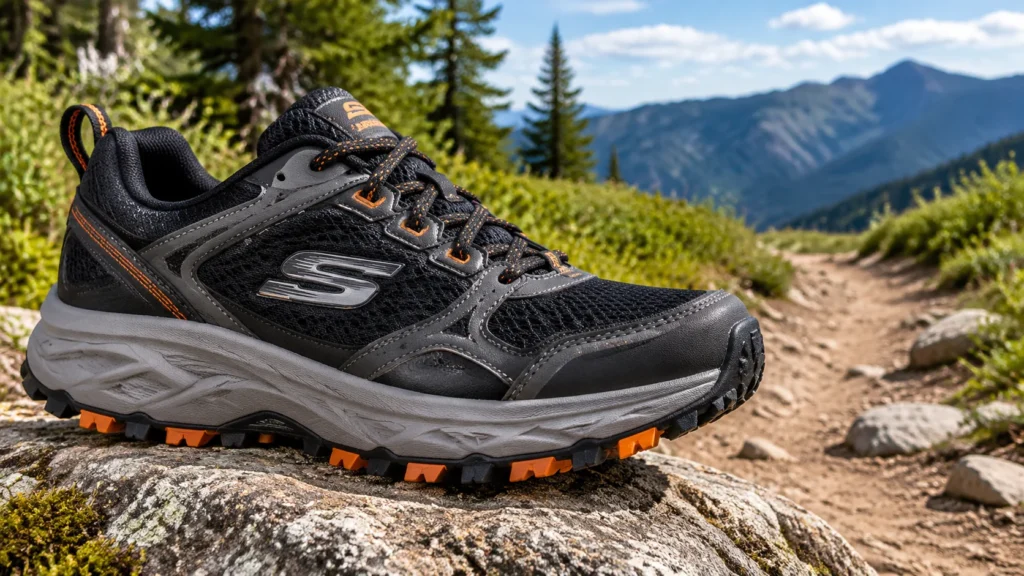
In short, the original Trail Altitude is best for easy trails, gravel paths, and casual walking. Its water-repellent upper, cushioned midsole, and grippy outsole suit mixed outdoor use. It is not a proven replacement for technical mountain footwear.
Quick verdict: Good budget-friendly design for maintained trails; buy only when the older stock fits well and offers a worthwhile saving.
Skechers identifies the original men’s shoe as style 220111. It pairs leather and mesh with responsive ULTRA LIGHT foam. An Air-Cooled Goga Mat insole adds a cushioned layer underfoot. An OrthoLite layer includes a small amount of recycled rubber.
The outsole uses multidirectional lugs. These raised rubber sections help the shoe engage loose soil from more than one direction. A wider base can add steadiness on routine paths. Skechers lists an 11 oz weight for a men’s size 9 and a 1.5-inch heel height.
That heel figure is not the heel-to-toe drop. Drop is the height difference between heel and forefoot. Skechers does not supply a verified drop figure on the cited original listing. Avoid treating 1.5 inches as a drop measurement.
Water resistance has limits. Light drizzle and damp grass are closer to this shoe’s stated purpose than deep puddles. The mesh and leather combination can still become wet. When weather changes fast, a separate waterproof model is the safer choice.
- Listed 11 oz men’s size-9 weight
- ULTRA LIGHT cushion and Goga Mat insole
- Flexible, multidirectional outsole lugs
- Water-repellent upper
- Wider outsole contact area
- No verified waterproof membrane
- Older stock can limit sizing
- No published lug depth or heel drop
- Traction on wet rock remains uncertain
Original-family Skechers GOrun Altitude
Amazon ASIN B0B3QTFXC5 is linked by an independent product index to model 220917-GYOR, a different original-family SKU. Check the Amazon product title, color, width, and size before ordering. Its live Amazon price was not independently verified.
What Is the Skechers GO RUN Trail Altitude 2.0 Best For?
Primarily, the Trail Altitude 2.0 Altaridge is best for buyers who want a current, versatile trail shoe. It adds a modern air-mesh and printed upper to a familiar cushioning system. The regular Altaridge is water-repellent, not sealed waterproof.
Quick verdict: Choose 2.0 for the refreshed construction and easier new-stock shopping, not because it has proven elite-level grip.
The Altaridge version carries Skechers style 237920. Its upper combines air mesh, 3D-print details, and leather overlays. Skechers also lists an Air-Cooled Goga Mat insole, ULTRA LIGHT cushioning, and the same general wide-base outsole concept.
The company lists a 1.5-inch heel height for Altaridge. That is the shoe’s heel height, not its heel-to-toe drop. I could not verify a comparable weight for this exact 2.0 SKU. A claim that it weighs less than the original would go beyond published data.
At the time of the price check, Skechers displayed an $80 price for Altaridge. Discounts and sizes vary by retailer. Some sellers stock medium and extra-wide widths, which gives buyers more ways to find a sound fit.
Do not mix every model with a 2.0 label. Altaridge, Marble Rock, Ravine, and Waterproof Ravine are related products, not identical shoe builds. The waterproof Ravine specifically lists a seam-sealed design. The standard Altaridge description does not make that claim.
See the running shoe feature checklist before paying more for labels that do not match your routes.
- Refreshed air-mesh upper
- Reinforcing leather overlays
- Goga Mat insole and ULTRA LIGHT foam
- Multidirectional lugs
- Choice of related waterproof variant
- $80 listed price before sales
- Standard Altaridge is not seam-sealed
- No verified weight for exact SKU
- Not a specialist icy-trail outsole
Skechers GO RUN Trail Altitude 2.0 Altaridge
A third-party product index identifies Amazon ASIN B0FDC26QN8 with Altaridge style 237920 GYMT. Check availability, seller, and size on Amazon. Skechers lists this style at $80; live Amazon pricing was not confirmed.
How Do the Trail Altitude and Trail Altitude 2.0 Specifications Compare?
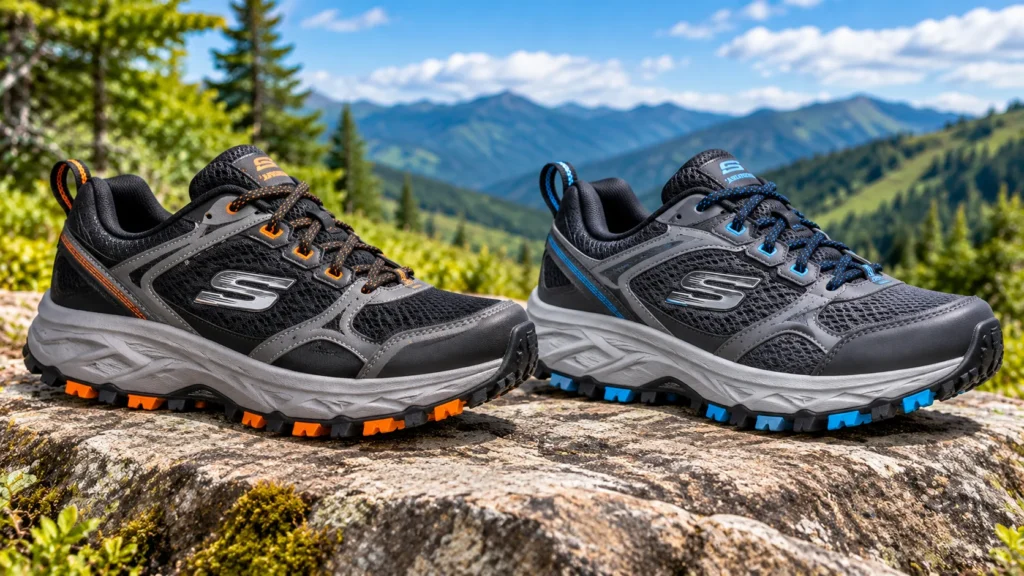
The two Skechers shoes share their basic cushion and traction recipe. The clearest documented difference is the upper design. The original has rugged leather and mesh, while Altaridge adds air mesh and 3D-printed details.
Do not mistake a missing published figure for weak performance. Without verified drop, lug-depth, or identical-size weight data for both versions, a numerical winner would be guesswork. The table separates confirmed specifications from unknown ones.
| Specification | Original GO RUN Trail Altitude | GO RUN Trail Altitude 2.0 Altaridge | Takeaway |
|---|---|---|---|
| Men’s style ID | 220111 | 237920 | Different constructions |
| Upper | Action leather and mesh | Air mesh, 3D print, leather overlays | 2.0 has updated upper |
| Midsole | ULTRA LIGHT | ULTRA LIGHT | Shared feature |
| Insole | Air-Cooled Goga Mat; OrthoLite layer listed | Air-Cooled Goga Mat | Original explicitly lists OrthoLite |
| Outsole | Flexible multidirectional lugs | Flexible multidirectional lugs | No measured grip winner |
| Outsole footprint | Wider base | Wider base | Shared stability concept |
| Water protection | Water-repellent | Water-repellent | Neither standard style is waterproof |
| Men’s size-9 weight | 11 oz (about 312 g) | Not verified | No direct weight winner |
| Heel height | 1.5 in (3.81 cm) | 1.5 in (3.81 cm) | Not heel-to-toe drop |
| Heel-to-toe drop | Not verified | Not verified | Do not invent a value |
| USD price reference | $53.99 third-party listing for different original-family SKU | $80 Skechers listed price | Not matched live Amazon offers |
| Fully waterproof choice | Not stated | Separate waterproof Ravine variant | Check exact product label |
Which Trail Altitude Has Better Grip on Dirt, Gravel, and Mud?
Neither Trail Altitude has a proven traction lead from published tests. Both use flexible outsoles with multidirectional lugs and broad contact areas. That design makes sense for easy dirt paths and mixed gravel, but deep mud needs a different level of evidence.
On firm ground, lug shape helps the rubber contact small breaks in the surface. Think packed dirt, a park loop, or a dry woodland path. Both Skechers designs suit that category better than smooth gym shoes.
On wet roots and polished rock, rubber compound matters as much as lug shape. Skechers does not publish a comparable wet-grip laboratory result for these exact two styles. A Zappos buyer of the original reported slipping when it was wet. That is one experience, not a controlled safety test.
REI’s trail-running footwear guidance explains why tread design and intended terrain must match. For steep technical routes, I would favor a shoe with tested outsole traction over either Altitude.
A practical tip: inspect the lugs for embedded gravel after each run. Stones can change how the sole meets the ground. If the trail is icy, use suitable winter traction or avoid that route. Neither standard model offers verified ice grip.
Which Trail Altitude Feels More Cushioned and Stable?
Both models use Skechers ULTRA LIGHT foam and Air-Cooled Goga Mat cushioning. There is no verified head-to-head lab test showing a softer ride in one model. The 2.0 earns a small editorial edge for its refreshed upper, not for a measured foam gain.
Midsole foam helps soften repeated impacts on firm dirt and gravel. Goga Mat adds another layer between the foot and the shoe. A broader outsole base can also make slow walking feel planted on predictable ground.
But foam alone cannot fix an unstable fit. When a foot slides forward on a descent, toes may hit the shoe’s front. Tightening the laces may help, but the wrong size or heel shape remains the bigger problem.
Try both shoes late in the day, when your feet have expanded. Walk down an incline if the store provides one. Your heel should stay secure, and your toes should not press into the front. Read this first running shoe guide for more sizing basics.
Do not assume a wider outsole means the toe box is wide. Outsole width and interior fit are different. Buyers seeking extra-wide sizes should confirm the width marking on the exact style before buying.
Which Trail Altitude Offers Better Price and Value?
The original wins on value only when you find a large, genuine discount. The 2.0 Altaridge has a verified $80 listed price on Skechers. A third-party index shows $53.99 for a different original-family SKU, creating a $26.01 reference gap.
Those two numbers are not a live, like-for-like Amazon comparison. Prices change with size, color, seller, and stock. The older shoe can even cost more when sellers have only rare sizes left.
My rule is simple: buy the original if it fits and saves around $20 or more against a comparable new 2.0 offer. Choose the 2.0 if the real checkout totals are close. Return policy and seller reliability also have value.
For example, an original pair priced at $60 with costly return shipping may lose to a $72 new 2.0 from a retailer offering easy returns. The sticker price does not show the full risk of an unfamiliar fit.
Always compare delivered price, width, color, and return terms. Do not treat the $80 list price as the only price anyone pays. Look for authorized sellers with clear product images and current stock information.
Which Model Handles Rain, Cold, and Rough Wear More Safely?
Neither standard Trail Altitude is designed as a fully waterproof winter shoe. The original and 2.0 Altaridge are water-repellent. Skechers sells a distinct Waterproof Trail Altitude 2.0 Ravine with a seam-sealed construction.
Water repellent means light water may bead or roll away at first. It does not promise dry feet after standing in a puddle or crossing a stream. Once the mesh is soaked, cold feet can become an issue on long walks.
The waterproof Ravine product page specifically describes seam sealing. That detail is absent from the standard Altaridge description. Check the exact label instead of buying by the 2.0 name alone.
For cold but dry days, socks and fit matter as much as upper material. Thick socks can change how a shoe fits. Leave enough toe room for natural movement while keeping the heel secure.
Commercial use calls for separate care. A delivery worker walking between vehicles may value traction and comfort, but neither model is presented here as certified slip-resistant work footwear. Choose workplace-rated shoes when an employer requires a tested safety standard.
Safety warning: Do not treat water-repellent fabric or visible rubber lugs as proof of safe grip on wet tile, ice, steep rock, or an oily workplace floor.
Which Trail Altitude Wins in Six Real-World Situations?
The 2.0 is my pick for routine new purchases, while the original wins when the discount is large. Neither model earns a winter-ice win. These are suitability judgments from design details, not six controlled field tests.
- Dry park trails: Both work in principle. Give 2.0 the edge for newer stock and updated upper choice.
- Budget gravel walks: Original wins if the same fit costs at least $20 less.
- Travel with one walking pair: 2.0 Altaridge wins for its versatile upper and current retailer choice.
- Light rain and damp grass: Draw. Both standard models have water-repellent uppers without a seam-sealed claim.
- Cold walks with snow or ice: Neither wins. Choose tested winter footwear and traction suitable for the surface.
- Courier or fleet yard shifts: Neither wins where slip-resistance certification is required. Work-safety specs take priority.
These outcomes show why one shoe cannot solve every outdoor problem. A trail shoe for walking dry gravel is not automatically a winter boot. Likewise, a comfortable sneaker does not become approved workwear because it has lugs.
If most of your week is on pavement, check the limits in this trail shoes on roads guide. Road wear can shorten the life of trail lugs before the upper looks old.
Is the Original Trail Altitude Worth Buying Over the 2.0?
Yes, the original is worth buying when the condition, fit, and savings are right. Its foam, Goga Mat insole, water-repellent upper, and outsole pattern still make a sound case for easy outdoor use.
Do not pay a premium just to get an older style number. Shoe foam and adhesives can age during long storage. Inspect old-stock pairs for hard foam, separating rubber, stained mesh, and poor return terms.
The 2.0 is also not a guaranteed performance leap. Its documented update is most visible in the upper. No matched lab test proves a faster pace, longer outsole life, or stronger wet traction. Buyers should not pay extra for results nobody has shown.
My practical threshold is a $20 saving, measured against the actual pair you can buy today. If the older pair costs $70 and the 2.0 costs $72 delivered, I would choose the newer model. If the original costs $50 and fits well, it deserves a serious look.
Who Should Buy the Original, the 2.0, or Neither?
Buy the original for discounted easy-trail comfort, or the 2.0 for a refreshed everyday trail shoe. Skip both when your main need is technical mountain grip, prolonged waterproof protection, or job-required slip certification.
- Find a large real discount
- Walk mostly maintained trails
- Know your size and width
- Want simple padded comfort
- Prefer easier new-stock shopping
- Like the air-mesh upper
- Need more width choices
- Want a current everyday pair
Do not buy either for technical routes that demand a specialist mountain sole. Compare an appropriate Salomon Speedcross 6 or Saucony Peregrine model for terrain-led traction. These are different designs, so check fit, lug style, and independent reviews first.
If rain is the main issue, inspect Skechers Waterproof Trail Altitude 2.0 Ravine instead. If your employer needs certified work shoes, choose a product with the required slip-resistance documentation. Do not replace a safety requirement with an editorial shoe score.
What Do Real Trail Altitude Buyers Say About Both Versions?
Buyer feedback favors comfort, but the samples and model variants differ. Zappos shows 76 reviews for a general original Trail Altitude page. About 87% of those reviews are four or five stars. A broader 2.0 review page shows 30 reviews, with about 80% at four or five stars.
These are review distributions on particular retailer pages, not worldwide owner ratings. They also do not prove how a shoe handles a specific trail. Use them as helpful signals, not laboratory results.
What Buyers Like and Question
76 Zappos reviews; 87% rated four or five stars.
- Positive fit and everyday comfort comments
- 88% of fit-survey responses true to size
- At least one complaint about slipping on wet ground
30 Zappos reviews; 80% rated four or five stars.
- Some buyers praise comfort on long hikes
- 100% true-to-size survey on that retailer page
- Some lower ratings show it will not suit everyone
Source: Zappos review pages for the original Trail Altitude and a 2.0 family listing; the counts are not for every color or Altaridge SKU.
In one 2.0 review, a buyer described an eight-day hiking trip with daily distances of 12 to 13 miles. That is useful feedback about comfort for that person, not proof of a universal break-in-free fit.
With the original, the fit survey looks strong, but a wet-surface complaint deserves attention. The safer conclusion is that comfort has positive buyer support while demanding traction remains unproven.
How Do You Clean and Store These Skechers Trail Shoes?
Clean both models gently by hand, then let them air-dry. Remove grit from the lugs and brush dirt from the mesh and leather overlays. Follow the manufacturer’s care guidance for each exact style.
First, shake loose stones from the outsole. Use a soft brush on the upper and a firmer brush on the rubber tread. Wipe with a slightly damp cloth when needed. Avoid soaking leather panels or applying harsh cleaning chemicals.
Take out the insoles when practical, and let them dry separately. Keep shoes away from heaters, hot car trunks, and tumble dryers. High heat can affect adhesives and foam. A fan with room-temperature air can help the lining dry.
For a detailed routine, follow these trail running cleaning steps. The guide covers mud removal, cleaning products, and air drying.
Inspect the heel lining and outsole after each run. Retire shoes that show unstable wear, failing seams, or reduced traction. No reliable mileage limit is published for these exact styles, so condition matters more than a promised number.
Final Verdict: Is the Skechers GO RUN Trail Altitude Worth It?
Yes, the original Trail Altitude is worth buying at the right price. Its documented 11 oz men’s weight, ULTRA LIGHT cushion, Goga Mat insole, and multidirectional lugs fit easy paths and daily walks. The 2.0 Altaridge is my better default for a fresh purchase.
The most useful buying rule is to check the exact model, not just the shoe name. A standard 2.0 Altaridge is water-repellent. A separately labeled waterproof Ravine is seam-sealed. That difference matters more in rain than a small discount.
If both standard shoes cost almost the same, choose the 2.0 in the fit you like. If a sound original pair is at least $20 cheaper, it can offer better value. For ice, steep wet rock, or workplace safety standards, choose footwear built and documented for that job.
Original Trail Altitude
Budget pick when available at a real discount. Verify exact model and size.
Trail Altitude 2.0 Altaridge
Fresh-pair pick with updated air mesh and the familiar cushioning package.
Frequently Asked Questions
Is the Skechers GO RUN Trail Altitude good for hiking?
Yes, it is a reasonable choice for maintained trails and casual day hikes. Its rubber lugs, padded footbed, and stable-looking wide outsole suit simple paths. For steep, rocky, or high-risk routes, compare dedicated hiking or technical trail shoes with evidence of stronger protection and traction.
What is the difference between Trail Altitude and Trail Altitude 2.0?
The clearest confirmed difference is the upper. The original 220111 uses rugged leather and mesh. The 2.0 Altaridge 237920 uses air mesh, 3D-print details, and leather overlays. Both list ULTRA LIGHT cushioning, Goga Mat insoles, and multidirectional outsole lugs.
Which is better, Skechers Trail Altitude or Trail Altitude 2.0?
The 2.0 Altaridge is my better choice for most new buyers. It offers refreshed construction and active retailer listings. The original becomes the better value when its fit and condition are right and the actual price is at least $20 lower than a comparable 2.0.
Are Skechers GO RUN Trail Altitude shoes waterproof?
No, the original and standard 2.0 Altaridge are described as water-repellent, not fully waterproof. Skechers sells a separate Waterproof Trail Altitude 2.0 Ravine with a seam-sealed design. Always check the product label because similarly named versions can offer different levels of water protection.
Can you wear the Trail Altitude on pavement every day?
Yes, you can walk on pavement in these shoes, but that is not their main design goal. Trail lugs wear against hard roads and may feel less smooth than road-shoe rubber. If most walks are on concrete, consider a road-running or walking model instead.
Affiliate Disclosure: As an Amazon Associate, I earn from qualifying purchases. If you click a link on this page and make a purchase, I may receive a small commission — at no extra cost to you. I only recommend products I genuinely believe will help you. This helps keep the site free and running. Thank you for your support.