

Quick Answer
The HOKA Speedgoat 6 wins for trail running with its Vibram Megagrip outsole and 5 mm advertised lugs. The HOKA Mach 6 wins for road running with its lighter 232-gram lab-measured weight and responsive foam. Choose the Speedgoat for rough ground or the Mach for paved roads and faster workouts.
The real difference between the HOKA Speedgoat 6 and Mach 6:
- Speedgoat 6 offers better grip on loose and rocky trails.
- Mach 6 weighs approximately 46 grams less per shoe.
- Mach 6 originally costs $15 less than Speedgoat 6.
⚡ Quick Verdict — HOKA Speedgoat 6 vs Mach 6
🏆 BEST FOR TRAILS
HOKA Speedgoat 6
Editorial suitability rating for trail running
$155 (Original MSRP)
✅ Best for:
Trail runners and hikers who need reliable grip and protection on rough terrain.
BEST FOR ROADS
HOKA Mach 6
Editorial suitability rating for road running
$140 (Original MSRP)
✅ Best for:
Road runners who want a light, responsive shoe for daily miles and speed workouts.
| Category | Speedgoat 6 | Mach 6 |
|---|---|---|
| Overall Winner for Trails | 🏆 | — |
| Best Value for Roads | — | ✅ |
| Technical Trail Grip | ✅ | ❌ |
| Lightweight Speed | — | ✅ |
| Rocky Terrain Protection | ✅ | — |
Bottom line: The Speedgoat 6 wins for demanding trails, while the Mach 6 offers better value and speed for road-focused runners.
Ratings represent editorial assessments of intended use, not Amazon customer ratings. Listed prices are original retail prices. Current prices and availability may vary.
Key Takeaways
- The Speedgoat 6 wins on trails with its Vibram Megagrip outsole.
- The Mach 6 originally costs $15 less, making it better value for road runners.
- The Speedgoat 6 uses 5 mm advertised lugs for demanding off-road routes.
- The Mach 6 suits beginners who train mainly on paved roads.
- The biggest difference is terrain suitability, not the amount of cushioning.
Buying a HOKA running shoe sounds simple until you compare different models. The Speedgoat 6 and Mach 6 both offer thick midsoles and lightweight designs.
However, these shoes solve two different running problems. One helps you move across rocky trails. The other helps you maintain a smooth pace on paved roads.
I’m Steven Tyler, and my focus in this comparison is practical footwear selection. I want to help you avoid paying for features you rarely use.
This review draws on published specifications, independent shoe tests, and documented reviewer observations. It does not claim original hands-on testing of either model.
The HOKA Speedgoat 6 combines protective cushioning with a rugged Vibram outsole. Meanwhile, the Mach 6 uses responsive foam to support faster road training.
Both models remain interesting options when available at discounted prices. Yet buying the wrong shoe for your running surface can reduce its value.
Are you planning long trail runs, daily road miles, or weekend hikes? Your answer matters more than the small price gap between these shoes.
Let’s compare their construction, fit, grip, and long-term usefulness. The differences become clear once you look beyond their similar appearance.
What Is the HOKA Speedgoat 6 Designed to Do?
Quick Verdict
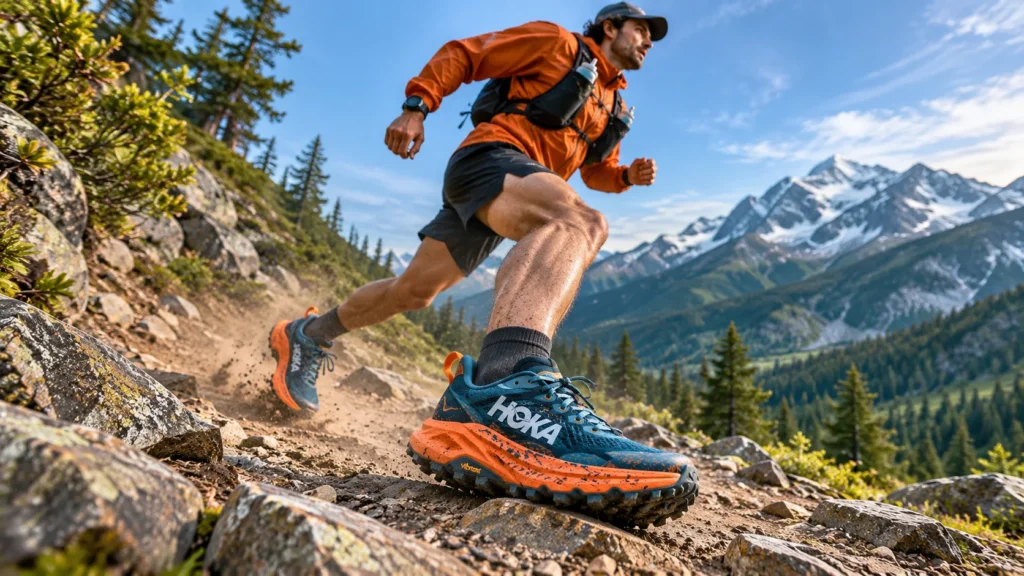
The HOKA Speedgoat 6 is a neutral trail running shoe built for uneven ground, long off-road runs, and light hiking.
Best for: Trail running, mountain routes, rocky paths, and long hikes.
Not ideal for: Road speed workouts or runners seeking an especially soft ride.
Original retail price: $155
Editorial scores based on published design features and intended use.
The Speedgoat 6 uses a Vibram Megagrip outsole to handle demanding trail surfaces. Its 5 mm advertised lugs help the shoe grip loose ground.
A compression-molded EVA midsole provides cushioning beneath the foot. The shoe also uses a woven upper and an internal support structure.
These features help secure your foot during turns and downhill sections. A protective toe bumper adds another layer of defense against trail debris.
The shoe originally retailed for $155 and has a listed 5 mm heel drop. Our detailed HOKA Speedgoat 6 review covers its firmer ride and trail-focused design.
✅ Pros
- Vibram Megagrip trail outsole.
- Deep lugs for loose surfaces.
- Protective toe construction.
- Cushioning for long trail runs.
- Secure internal support structure.
- Available in wide sizes.
❌ Cons
- Heavier than the Mach 6.
- Firmer ride than some runners expect.
- Not optimized for paved roads.
- Higher original retail price.
- Standard version is not waterproof.
- Fit may feel snug for some feet.
Trail Running Pick
HOKA Speedgoat 6 Trail Running Shoes
A protective trail shoe with a Vibram outsole, cushioned midsole, and a secure upper for uneven running surfaces.
- Original MSRP: $155
- Advertised heel drop: 5 mm
- Outsole: Vibram Megagrip
- Running surface: Trails
Check HOKA Speedgoat 6 Prices on Amazon
Check available sizes, colors, sellers, and current prices before ordering.
What Is the HOKA Mach 6 Designed to Do?
Quick Verdict
The HOKA Mach 6 is a lightweight road running shoe that balances daily comfort, responsive cushioning, and faster training.
Best for: Daily road runs, tempo workouts, treadmill sessions, and lighter training.
Not ideal for: Technical trails, deep mud, or rough mountain routes.
Original retail price: $140
Editorial scores based on published design features and intended use.
The Mach 6 uses a supercritical foam midsole to provide a lively running experience. Its lightweight build makes it suitable for steady runs and speed sessions.
The shoe features a creel jacquard mesh upper with strategic rubber coverage underneath. This design balances airflow, outsole protection, and weight.
Understanding supercritical running shoe foam helps explain why the Mach feels more responsive. Its foam design serves a different purpose from traditional trail cushioning.
The Mach 6 originally retailed for $140. It offers a practical choice for runners who want one shoe for several road workouts.
✅ Pros
- Lightweight road running design.
- Responsive supercritical foam.
- Suitable for multiple training paces.
- No rigid carbon racing plate.
- Strategic outsole rubber coverage.
- Lower original retail price.
❌ Cons
- Limited grip on loose trails.
- No dedicated protective trail bumper.
- Standard fit may feel narrow.
- Exposed foam can show surface wear.
- Not a dedicated stability shoe.
- Not designed for waterproof protection.
Road Running Pick
HOKA Mach 6 Road Running Shoes
A light and responsive trainer for runners who want smooth daily miles without giving up speed.
- Original MSRP: $140
- Advertised heel drop: 5 mm
- Midsole: Supercritical EVA foam
- Running surface: Roads
Check HOKA Mach 6 Prices on Amazon
Confirm the model, shoe width, seller, and return policy before buying.
HOKA Speedgoat 6 vs Mach 6: How Do the Specs Compare?
The Speedgoat 6 offers more trail-specific protection, while the Mach 6 reduces weight. Both advertise a 5 mm heel drop, but their construction differs. The outsole and midsole designs explain most of their practical performance differences.
| Specification | HOKA Speedgoat 6 | HOKA Mach 6 | Advantage |
|---|---|---|---|
| Original MSRP | $155 | $140 | Mach 6 |
| Shoe category | Trail running | Road running | Use dependent |
| Men’s model number | 1147791 | 1147790 | — |
| Approximate reference weight | 278 g / 9.8 oz | 232 g / 8.2 oz | Mach 6 |
| Advertised heel drop | 5 mm | 5 mm | Tie |
| RunRepeat measured drop | 4.9 mm | 9.6 mm | Preference dependent |
| Midsole | Compression-molded EVA | Supercritical EVA | Mach 6 for road speed |
| Outsole | Vibram Megagrip | Strategic rubber | Speedgoat 6 for trails |
| Advertised lug depth | 5 mm | Road tread | Speedgoat 6 |
| Upper material | Woven textile | Creel jacquard mesh | Use dependent |
| Toe protection | Trail toe bumper | Standard road construction | Speedgoat 6 |
| Tongue construction | Gusseted tongue | Dual internal gusset | Tie |
| Support category | Neutral | Neutral | Tie |
| Carbon plate | No | No | Tie |
| Wide sizes | Available | Available | Tie |
| Waterproof standard model | No | No | Tie |
| Best training type | Technical trail miles | Daily road and tempo runs | Use dependent |
Specifications refer to standard models. Weight varies with size and testing methods. MSRP means the manufacturer’s suggested retail price, not a verified current selling price.
One notable difference appears in independent heel-drop measurements. RunRepeat recorded 4.9 mm for the Speedgoat and 9.6 mm for the Mach.
Another independent test reported a 5.9 mm drop for the Mach 6. Different measurement methods can produce different results, so these findings need context.
Do not assume both shoes will feel identical because their advertised drops match. Midsole firmness, sole shape, and your foot strike also affect the ride.
Expert insight: Two shoes with the same advertised heel drop can produce different running experiences. Consider their foam, sole shape, and intended terrain before choosing.
Which HOKA Shoe Offers Better Traction and Terrain Performance?
The HOKA Speedgoat 6 wins for demanding off-road surfaces. Its Vibram Megagrip rubber and deep lugs provide a trail-focused grip system. The Mach 6 performs better on smooth roads, where aggressive trail lugs offer fewer benefits.
Which Shoe Handles Rocky and Uneven Trails Better?
The Speedgoat 6 is the better choice for rocky trails. Its 5 mm advertised lugs help engage loose soil and uneven ground.
HOKA combines these lugs with Vibram Megagrip rubber. This construction helps runners maintain contact across changing trail surfaces.
Consider a 10-mile mountain route with gravel, roots, and steep turns. The Speedgoat offers more appropriate outsole features for that route.
The Mach 6 lacks a dedicated trail traction system. Its road tread can manage short stretches of compact dirt but has limits.
Trail grip also depends on your pace, foot placement, and surface conditions. Even a good trail shoe cannot prevent every slip.
Which Shoe Performs Better on Roads and Treadmills?
The Mach 6 wins for paved roads and treadmill workouts. Its outsole uses road-focused rubber coverage rather than deep trail lugs.
This design suits runners who maintain steady forward movement. The lighter build also reduces unnecessary shoe weight during repeated steps.
The Speedgoat 6 can handle short paved sections between trails. However, frequent pavement use places extra wear on its trail tread.
For a runner who trains five days each week on sidewalks, the Mach makes more sense. Paying for mountain traction brings little benefit there.
Category winner: HOKA Speedgoat 6 for trails. HOKA Mach 6 for roads and treadmills.
Which Shoe Offers Better Cushioning, Comfort, and Speed?
The HOKA Mach 6 wins for responsive road cushioning and faster training. Its supercritical foam and lighter build support changes in pace. The Speedgoat 6 offers a more protective trail-focused ride, where ground conditions matter more than pure speed.
How Do Their Midsole Foams Compare?
The Mach 6 uses supercritical EVA foam for its road-focused midsole. The Speedgoat 6 uses compression-molded EVA with a firmer trail-focused character.
The difference matters during steady efforts on pavement. A responsive foam can make changes in pace feel smoother.
On rocky trails, a controlled ride can be more useful than maximum softness. A softer shoe is not always the better trail shoe.
Runners who prefer plush cushioning should also consider Salomon trail running shoes and compare their fit and sole geometry.
Which Shoe Feels Better During Long Runs?
The Speedgoat 6 suits long trail runs, while the Mach 6 suits long road runs. Your running surface determines which cushioning design offers more value.
A long trail route involves frequent changes in direction and foot placement. The Speedgoat combines underfoot cushioning with trail traction and protection.
The Mach 6 focuses on a smoother road-running rhythm. Its lighter construction can feel more natural during extended paved runs.
Neither shoe guarantees comfort for every runner. Foot shape, training distance, and personal cushioning preferences remain important.
Which HOKA Shoe Offers a Better Fit?
Neither shoe wins for every foot shape. Both models offer wide options, but their standard versions can feel snug for some runners.
The Speedgoat needs a secure fit to limit unwanted movement on slopes. Excess space can allow your foot to slide forward during descents.
The Mach 6 also uses a close-fitting upper. Some runners with broad forefeet may prefer its wide version.
Try both shoes with the socks you normally wear. Check toe space while standing and avoid relying on shoe size alone.
Fit tip: Leave roughly a thumb’s width between your longest toe and the shoe’s front. Check that your heel stays secure without excessive lace pressure.
Category winner: Mach 6 for lightweight road cushioning and speed. Speedgoat 6 for protective trail cushioning.
Which HOKA Shoe Offers Better Value for Money?
The Mach 6 offers better value for road runners at its original $140 price. The Speedgoat 6 costs $155 at its original retail price. However, its extra $15 pays for useful trail features rather than unnecessary extras.
Price alone cannot determine the better deal. A lower-priced road shoe offers poor value when your main routes cross demanding trails.
Think about how often you use each type of surface. Someone who runs four times weekly on pavement gains more from the Mach 6.
Meanwhile, someone who spends weekends on rocky mountain paths gains more from the Speedgoat. Its additional grip serves a practical need.
Older running shoe models can also appear at clearance prices. Compare available sizes and return policies before choosing a discounted pair.
| Value Factor | Speedgoat 6 | Mach 6 |
|---|---|---|
| Original price | $155 | $140 |
| Illustrative use distance | 400 miles | 400 miles |
| Illustrative cost per mile | $0.39 | $0.35 |
| Best value use | Trail running | Road training |
The cost-per-mile calculation assumes 400 miles for illustration only. Actual shoe lifespan depends on terrain, running style, body weight, and wear.
Which Shoe Offers Better Durability and Protection?
The Speedgoat 6 provides more protection against trail debris and uneven ground. Its rugged outsole and protective upper suit demanding terrain. The Mach 6 uses a lighter construction that makes more sense for regular road training.
How Do Their Rubber Outsoles Compare?
The Speedgoat 6 uses Vibram Megagrip with a dedicated trail lug pattern. The Mach 6 uses rubber placed in important road contact zones.
Both outsole designs serve a clear purpose. Trail lugs help engage loose surfaces, while road rubber supports smoother pavement contact.
Running on asphalt regularly can round off the Speedgoat’s lugs. That wear can reduce the grip available during future trail runs.
The Mach 6 contains areas of exposed midsole foam. Surface marks in these areas do not always indicate immediate performance failure.
Inspect the outsole regularly rather than judging durability by appearance alone. Uneven wear and changing grip matter more than minor cosmetic marks.
Which Shoe Provides Better Trail Protection?
The Speedgoat 6 wins for protection on rocky paths. Its trail toe bumper offers additional coverage when you encounter roots and debris.
The shoe also uses an internal support structure to secure the foot. A close fit can help limit unwanted movement on steep terrain.
However, the Speedgoat is not a heavy-duty mountaineering boot. It cannot provide the same structure or protection as technical climbing footwear.
The Mach 6 remains appropriate for ordinary running surfaces. Its lighter upper does not need the same level of trail reinforcement.
What Running Safety Mistakes Should You Avoid?
The most important safety step is choosing footwear that matches your route. The Speedgoat suits trails, while the Mach suits paved running surfaces.
Never assume a trail outsole guarantees grip on every wet surface. Ice, smooth wet rocks, and deep mud can remain slippery.
A thick midsole also does not guarantee ankle stability. Slow down on unfamiliar terrain and choose careful foot placement.
Check your laces before every demanding run. Stop if your shoes cause persistent numbness, sharp pain, or unusual discomfort.
Safety Warning
Neither shoe offers guaranteed grip on ice. Avoid using the Mach 6 on steep, loose technical trails. Choose suitable winter traction equipment when conditions require it.
Category winner: Speedgoat 6 for trail protection. Overall lifespan depends on how and where each shoe is used.
Which HOKA Shoe Wins in Real-World Running Situations?
The Speedgoat 6 wins on rough trails and demanding hiking routes. The Mach 6 wins for daily road training and speed sessions. Matching the shoe to your regular running conditions offers more value than choosing by brand popularity.
| Running Situation | Winner | Why It Wins |
|---|---|---|
| Technical mountain trails | Speedgoat 6 | Trail grip and protective construction. |
| Daily 5K road runs | Mach 6 | Lower weight and road-specific tread. |
| Weekend hiking | Speedgoat 6 | Better grip on uneven paths. |
| Treadmill workouts | Mach 6 | Smooth road-oriented sole design. |
| Cold, loose dirt trails | Speedgoat 6 | More suitable trail tread on ice-free ground. |
| Running club speed sessions | Mach 6 | Responsive foam and lighter construction. |
| Long trail races | Speedgoat 6 | Trail protection and long-distance cushioning. |
| Mixed road and light gravel | Depends on route | A road-to-trail hybrid can suit frequent mixed use. |
Suppose your weekly routine includes three short road runs and one easy park run. The Mach 6 can cover those sessions if the park surface remains smooth.
Now consider a runner who spends most weekends climbing rocky trails. The Speedgoat 6 offers more relevant features for those demands.
For an equal mix of road and moderate trail running, consider a hybrid shoe. The HOKA Challenger series provides another option worth comparing.
Is the HOKA Speedgoat 6 Worth the Extra Money?
Yes, the Speedgoat 6 is worth its original $15 premium for regular trail runners. Its Vibram outsole and protective construction address real off-road needs. Road runners should save that money and choose the Mach 6 instead.
Speedgoat 6
Original retail price
Mach 6
Original retail price
The price difference represents roughly 11% of the Mach 6’s original price. That premium becomes worthwhile when you regularly use trail-specific features.
My suggested buying targets are below the original retail prices. These targets represent editorial value judgments, not verified current deals.
| Buying Target | Speedgoat 6 | Mach 6 |
|---|---|---|
| Reasonable discount | $125 or less | $115 or less |
| Strong clearance value | $100 or less | $95 or less |
| Near original MSRP | Compare Speedgoat 7 | Compare Mach 7 |
Do not buy a discounted shoe that fits poorly. A comfortable fit is worth more than a small saving at checkout.
Check the seller’s return policy and make sure the listing matches your preferred model. Older stock can have limited width and color choices.
Who Should Buy the HOKA Speedgoat 6 or Mach 6?
Buy the Speedgoat 6 if your regular routes include rough trails and rocky terrain. Buy the Mach 6 if you run mainly on pavement. Avoid choosing either model simply because it offers thick cushioning or an attractive discount.
Who Should Buy the HOKA Speedgoat 6?
The Speedgoat 6 is best for runners who need trail grip, cushioning, and foot protection. Its design suits technical trails and extended off-road efforts.
✅ Buy the Speedgoat 6 if:
- You run on rocky mountain trails.
- You need a dedicated trail outsole.
- Weekend hiking forms part of your routine.
- You prefer controlled trail cushioning.
- Your routes include steep, loose descents.
- You can find your correct size at a good price.
❌ Skip the Speedgoat 6 if:
- You run almost entirely on roads.
- Your main goal is fast road training.
- You dislike a firmer trail ride.
- You need waterproof footwear.
- You require a dedicated stability shoe.
- The available fit causes toe pressure.
Who Should Buy the HOKA Mach 6?
The Mach 6 is best for neutral road runners who want a versatile trainer. Its lighter build suits daily miles and quicker sessions.
✅ Buy the Mach 6 if:
- Your regular routes are paved.
- You enjoy tempo runs and intervals.
- You prefer lightweight running shoes.
- You want one shoe for several road paces.
- You prefer responsive cushioning.
- You want to avoid a carbon racing plate.
❌ Skip the Mach 6 if:
- You regularly run on technical trails.
- Your routes contain deep mud.
- You need extra trail toe protection.
- You want a dedicated motion-control shoe.
- You require waterproof construction.
- The available sizes feel too narrow.
Who Should Avoid Both Running Shoes?
Runners with specific support needs or unusual terrain demands should compare other models. Neither the Speedgoat 6 nor Mach 6 suits every running situation.
Consider a Different Shoe If You Need:
- Mixed terrain: Compare the HOKA Challenger series.
- Dedicated road stability: Consider the HOKA Arahi or Gaviota series.
- Maximum road cushioning: Compare the HOKA Bondi series.
- Technical trail racing: Explore lighter trail racing models.
- Snow and ice traction: Consider dedicated winter running footwear.
- More forefoot space: Explore shoes with broader toe-box designs.
Our Topo Terraventure 4 review offers another trail shoe comparison for readers exploring different fit and protection options.
What Are Real Buyers and Reviewers Saying About Both HOKA Shoes?
Published feedback highlights the Speedgoat 6’s trail grip and the Mach 6’s responsive road ride. Common concerns involve cushioning firmness and fit. These observations show why personal comfort remains important even when a shoe performs well in independent tests.
Speedgoat 6 Feedback
- Dependable trail traction.
- Protective construction.
- Secure fit on uneven terrain.
- Suitable for extended trail sessions.
- Firmer cushioning than some expect.
- Snug fit for certain foot shapes.
- Less lively ride than some competitors.
- Limited appeal for road-only running.
Mach 6 Feedback
- Lightweight construction.
- Responsive cushioning.
- Versatility across road workouts.
- Strong performance for its category.
- Close-fitting forefoot.
- Potential upper lining wear.
- Limited technical trail suitability.
- Not ideal for every cushioning preference.
Independent Speedgoat 6 reviews discuss its firmer ride compared with earlier expectations. This matters for runners who associate HOKA with especially soft cushioning.
Mach 6 reviews place more emphasis on its road versatility and foam response. The shoe’s fit still deserves attention before purchase.
When reading customer reviews, look for people who share your running habits. A trail runner’s experience carries more relevance when you plan similar routes.
Feedback above summarizes published review themes. Live Amazon customer reviews, customer ratings, and verified-purchase counts could not be independently confirmed for this comparison.
How Should You Care for HOKA Running Shoes?
Clean HOKA running shoes gently, dry them naturally, and store them away from direct heat. Remove trail debris after each demanding run. Regular care helps preserve the upper, outsole, and cushioning without exposing the materials to unnecessary stress.
1. Remove Dirt After Every Trail Run
Use a soft brush to remove loose dirt from the Speedgoat’s outsole. Clear trapped stones and mud from between the lugs.
The Mach 6 needs less intensive cleaning after normal road runs. A damp cloth can remove most surface dust.
2. Wash the Upper by Hand
Clean both shoes with lukewarm water, mild soap, and a soft cloth. Avoid harsh detergents and aggressive scrubbing.
Remove the insoles and laces when they need separate cleaning. Follow the care directions supplied with your particular shoe.
3. Let the Shoes Air Dry
Place wet shoes in a shaded area with good airflow. Do not use a clothes dryer or place them against a heater.
High heat can affect adhesives and shoe materials. Natural drying offers a gentler way to remove moisture.
4. Avoid Leaving Shoes in Hot Cars
Store your running shoes in a cool, dry location. Avoid sealed bags when the shoes remain damp.
Long periods of heat and moisture can affect footwear materials. Give each pair enough time to dry between wet runs.
5. Inspect the Outsole and Cushioning
Check the Speedgoat’s lugs for rounded edges and uneven wear. Inspect the Mach 6 for excessive rubber loss and damaged foam.
Many runners use 300 to 500 miles as a general replacement guide. Actual replacement timing depends on wear, comfort, and running conditions.
Replace shoes earlier if traction or support declines noticeably. Do not rely on mileage alone when assessing their condition.
Maintenance tip: Reserve your Speedgoat 6 for trails whenever practical. Reducing unnecessary pavement miles can help preserve its dedicated trail tread.
How Was This HOKA Shoe Comparison Researched?

This comparison uses manufacturer specifications, independent laboratory measurements, and published field reviews. Each shoe receives an assessment based on its intended running surface. The recommendations do not rely on invented mileage logs, original wear tests, or unverified customer ratings.
Independent testing provides useful details that advertised specifications cannot always capture. For example, laboratory heel-drop measurements can differ between testing organizations.
Published field reviews add another perspective on fit and terrain suitability. However, individual reviewers can experience the same cushioning differently.
I assess both shoes against their intended purpose rather than using one universal performance score. A road trainer should not lose points simply for lacking technical trail lugs.
The original retail prices provide a consistent value reference. Current seller prices, available widths, and stock levels require separate checks.
Research and Evaluation Sources
-
RunRepeat HOKA Speedgoat 6 laboratory review
— construction, traction, and measured specifications. -
RunRepeat HOKA Mach 6 laboratory review
— weight, foam, fit, and heel-drop measurements. -
RTINGS HOKA Mach 6 review
— independent weight and geometry measurements. -
iRunFar HOKA Speedgoat 6 review
— trail-focused field observations. -
HOKA official website
— manufacturer product information and model identification.
This is a research-based editorial comparison. No original hands-on testing is claimed. Editorial scores represent suitability judgments rather than laboratory scores or customer rating averages.
Final Verdict: Should You Buy the HOKA Speedgoat 6 or Mach 6?
Buy the HOKA Speedgoat 6 if trail running forms the main part of your routine. Buy the HOKA Mach 6 if you prefer paved roads and faster training. Both offer useful performance within their intended categories, but neither replaces the other.
The Speedgoat 6 earns its higher original price through trail-specific grip and protection. Its Vibram outsole provides a clear reason to choose it for demanding terrain.
The Mach 6 takes a different approach. It reduces weight and uses responsive foam to support a wider range of road training paces.
Both remain worth considering when you find the correct fit at a discount. Compare newer models if older stock costs close to its original price.
Choose the Right HOKA for Your Running Surface
🏆 BEST TRAIL RUNNING PICK
HOKA Speedgoat 6
Choose this shoe for rocky trails, long off-road runs, and hiking.
- Vibram Megagrip outsole
- 5 mm advertised lugs
- Protective trail construction
- Original MSRP: $155
🏆 BEST ROAD RUNNING PICK
HOKA Mach 6
Choose this shoe for daily road running, tempo sessions, and lightweight training.
- Responsive supercritical foam
- Lightweight construction
- Road-focused rubber outsole
- Original MSRP: $140
My final recommendation is simple. Spend your money on the features you will use during most of your runs.
A road runner gains little from aggressive trail lugs. A mountain runner should not sacrifice suitable traction just to save shoe weight.
The right running shoe is the one that fits both your feet and your regular running surface.
Frequently Asked Questions
Which Is Better, HOKA Speedgoat 6 or Mach 6?
The Speedgoat 6 is better for trail running, hiking, and rocky terrain. The Mach 6 is better for daily road running and faster workouts. Both offer neutral support, but their outsole and midsole designs serve different purposes.
What Is the Difference Between HOKA Speedgoat 6 and Mach 6?
The main difference is terrain suitability. The Speedgoat 6 uses a rugged Vibram outsole with 5 mm advertised lugs. The Mach 6 uses lighter construction, supercritical foam, and road-focused rubber coverage. The Speedgoat originally costs $15 more.
Can You Wear the HOKA Speedgoat 6 on Roads?
Yes, you can wear the Speedgoat 6 on roads for short connecting sections. However, frequent pavement running can accelerate wear on its trail lugs. The Mach 6 remains the better choice if most of your running takes place on paved surfaces.
Is the HOKA Speedgoat 6 Good for Hiking?
Yes, the Speedgoat 6 is suitable for hiking on many established trails. Its cushioning, protective toe design, and Vibram outsole support off-road movement. It is not a replacement for technical hiking or mountaineering footwear when those activities require extra protection.
Is the HOKA Speedgoat 6 Worth Buying?
Yes, the Speedgoat 6 remains worth considering for trail runners who prefer a secure, protective shoe. It offers stronger value when available below its original $155 price. Compare the fit, available discounts, and newer Speedgoat models before making your final choice.
Affiliate Disclosure
As an Amazon Associate, Footwear Hiker earns from qualifying purchases. This article contains affiliate links. If you make a purchase through one of these links, we may earn a commission at no additional cost to you. Our recommendations focus on product suitability, published research, and practical buying considerations. Prices and product availability may change.


